The countertop is one of the hardest-working and most visible parts of a kitchen. It must resist daily cleaning, spills, cookware, food preparation and concentrated loads while also coordinating with the cabinet doors, flooring and lighting.
Material names alone do not tell the whole story. Natural stone varies from slab to slab, engineered materials depend on their composition and production quality, and every countertop depends on correct templating, fabrication, support, joint placement and installation.
This guide compares six widely specified countertop materials and explains where each one performs best.
First understand the complete countertop system
- Surface material: the stone, engineered sheet or metal that provides the visible work surface.
- Thickness and edge: the actual material thickness plus any laminated, mitred, built-up or folded edge detail.
- Support: cabinets, rails, plywood, honeycomb aluminium or another approved base, depending on material and span.
- Fabrication: sink and hob cut-outs, seams, welded or bonded joints, edge finishing, reinforcement and transport protection.
- Installation: cabinet levelling, joint support, silicone, splashback details and final sealing where required.
Approve the material and fabrication drawing together. Confirm colour, finish direction, thickness, edge profile, seam position, overhang, cut-outs, support and backsplash before production.
Countertop materials compared
| Material | Type | Main strengths | Main limitations | Best use | Price level |
|---|---|---|---|---|---|
| Engineered quartz | Quartz mineral with resin and pigments | Consistent appearance, low maintenance, strong stain resistance | Resin can be affected by excessive heat; seams and pattern matching remain visible | Residential kitchens, apartments and volume projects | Medium–high |
| Sintered stone Porcelain slab | Mineral-based slab fired or sintered at high temperature | Excellent heat, UV, scratch and stain performance; thin large formats | Brittle edges; specialist cutting and handling required | Modern kitchens, waterfall islands, outdoor-facing and high-use areas | High |
| Granite | Natural igneous stone | Strong natural stone, heat tolerant and distinctive crystalline pattern | Porosity and maintenance vary; each slab is different | Busy kitchens, natural-stone projects and traditional interiors | Medium–high |
| Marble | Natural metamorphic stone, usually calcite-rich | Unique veining, premium appearance and timeless character | Can etch, stain and scratch; requires realistic maintenance expectations | Luxury kitchens, islands, baking areas and feature surfaces | High–premium |
| Acrylic solid surface | Acrylic resin with mineral filler and pigments | Seamless joints, integrated sinks, repairable surface and broad colour range | Can scratch and scorch; direct high heat must be avoided | Seamless residential kitchens, healthcare, hospitality and curved designs | Medium–high |
| Stainless steel | Stainless-steel sheet formed over a stable substrate or fabricated frame | Hygienic, non-porous, heat and moisture resistant; sinks can be welded in | Scratches, fingerprints and dents show; fabrication quality is critical | High-use kitchens, wet zones and commercial-inspired projects | High |
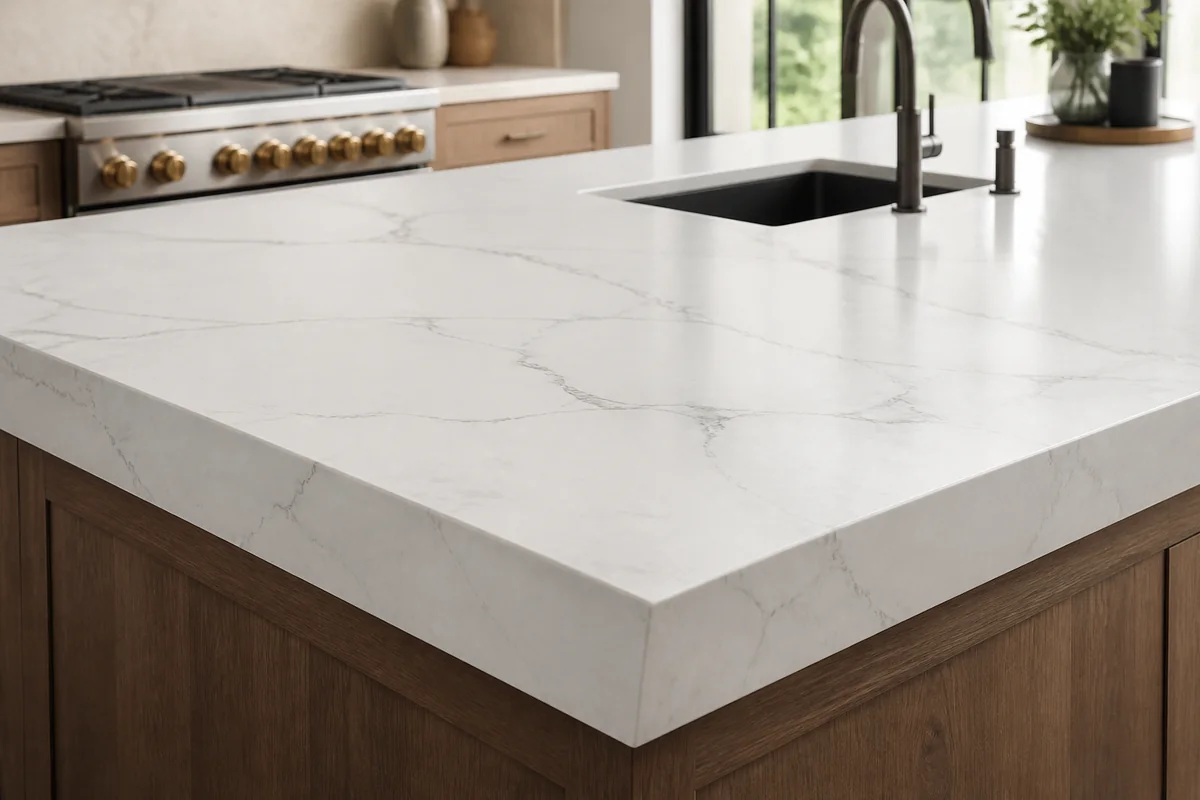
1. Engineered quartz: consistent and easy to maintain
Engineered quartz combines quartz mineral with resin, pigments and selected decorative materials. Factory production makes colour and pattern more repeatable than most natural stone, which is useful when several kitchens or replacement pieces must coordinate.
Its low-porosity surface is easy to clean and generally resists household staining well. However, the resin component means hot cookware should not be placed directly on the surface. Large veined designs also require careful slab layout so seams, splashbacks and waterfall ends align convincingly.
| Best for | Residential kitchens, apartments, rental projects and repeatable multi-unit specifications |
|---|---|
| Available looks | Solid white, concrete, fine grain, sparkle and marble-inspired veining |
| Check before ordering | Slab size, actual thickness, resin quality, pattern repeat, seam layout, heat guidance and warranty terms |
| Main advantage | Balanced appearance, durability, colour consistency and low maintenance |
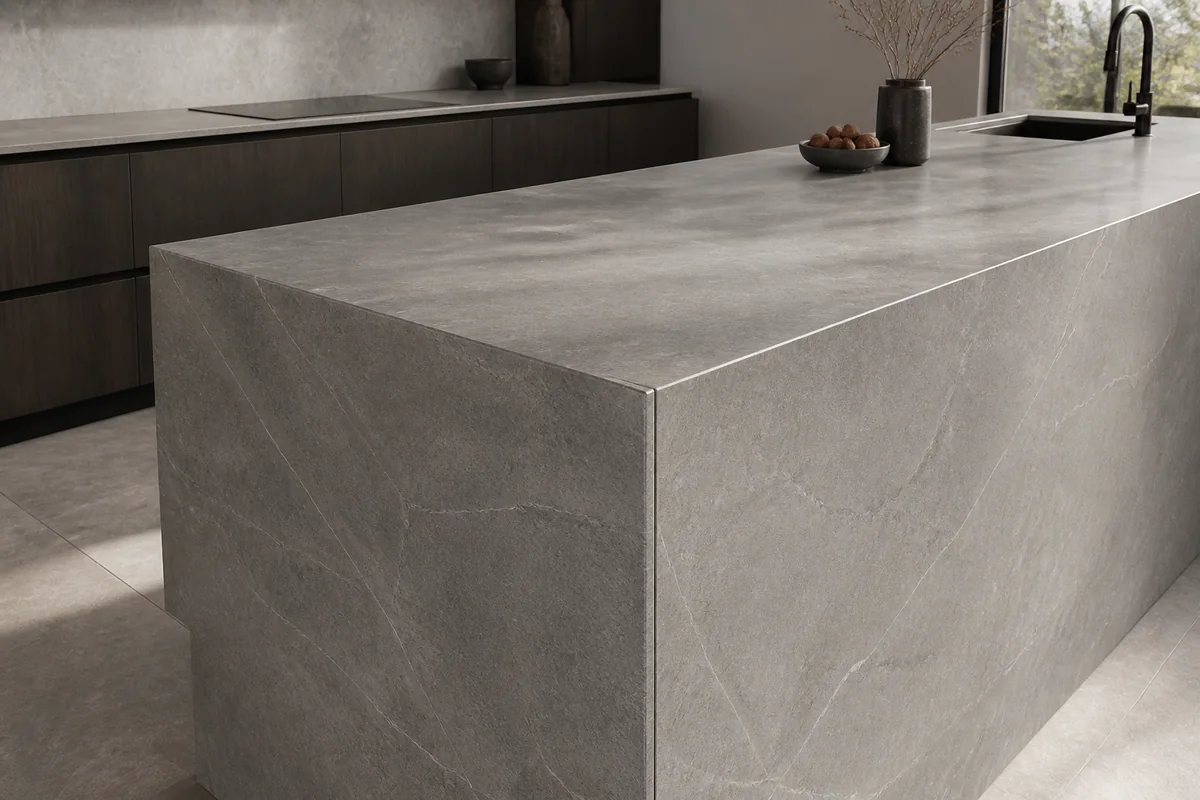
2. Sintered stone: thin, heat resistant and highly versatile
Sintered stone and large-format porcelain slabs are made from mineral raw materials consolidated and fired or sintered under controlled conditions. The surface can reproduce marble, concrete, metal and solid colours in matte, textured or polished finishes.
The material offers excellent resistance to heat, UV exposure, staining and surface scratching. Its main risk is fabrication: thin slabs and exposed corners can chip if cutting, edge finishing, transport or cabinet support is poor. Confirm that the fabricator has suitable bridge-saw or waterjet equipment and experience with the selected slab.
| Best for | Modern islands, slim profiles, waterfall ends, outdoor-facing kitchens and high-use projects |
|---|---|
| Available looks | Marble, concrete, stone, metal, timber-inspired and solid colours |
| Check before ordering | Slab thickness, mesh backing, edge build-up, cut-out radius, support, fabrication equipment and transport frame |
| Main advantage | Strong heat, UV and stain performance in thin large-format slabs |
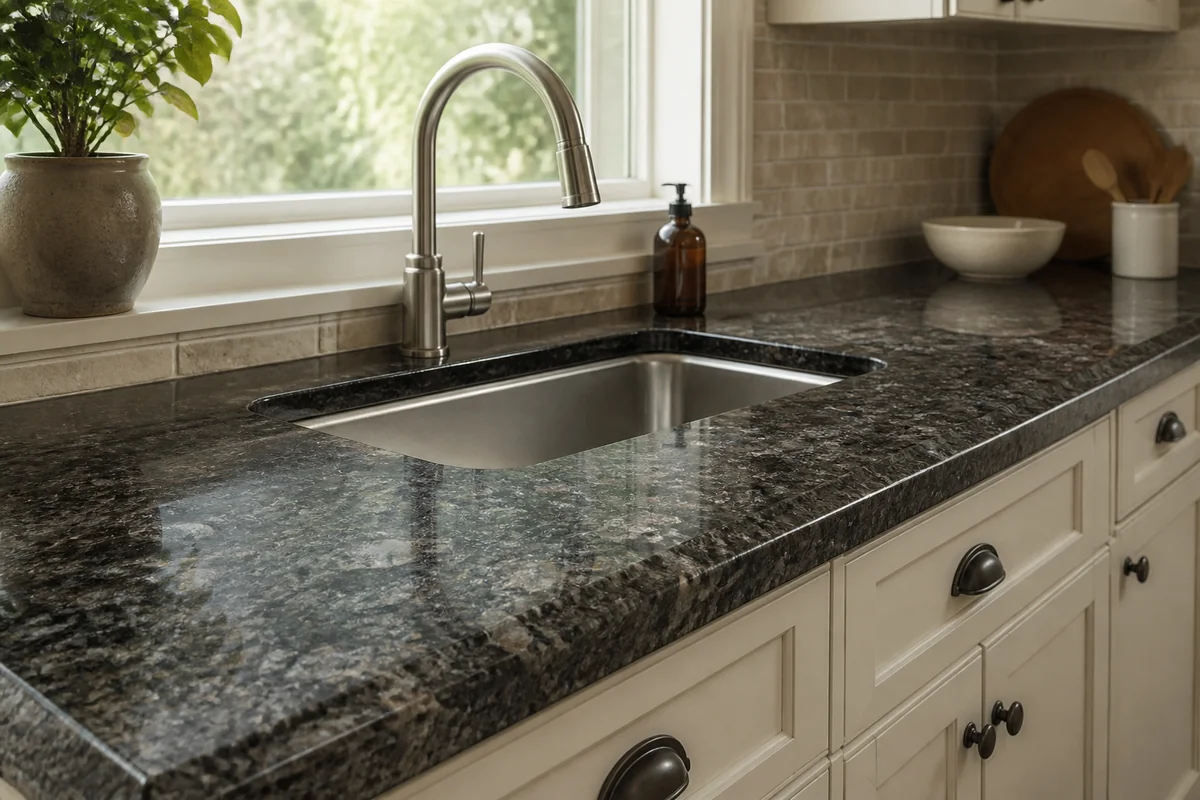
3. Granite: durable natural stone with crystalline character
Granite is a natural igneous stone valued for its crystalline structure, heat tolerance and broad range of colours. Dense, well-selected granite can serve a busy kitchen for many years, while every slab retains natural variation that makes the finished countertop unique.
The trade name does not always describe identical geology or performance. Absorption, fissures, resin treatment and sealing needs vary by source and colour. Review the actual slab, not only a small sample, and agree how natural fissures, colour movement and seams will be handled.
| Best for | Busy kitchens, natural-stone specifications, traditional interiors and durable feature islands |
|---|---|
| Available looks | Black, grey, white, brown, red and multicoloured crystalline patterns |
| Check before ordering | Actual slab, absorption, fissures, resin treatment, sealing guidance, thickness, seam and cut-out reinforcement |
| Main advantage | Strong natural-stone performance with unique mineral character |
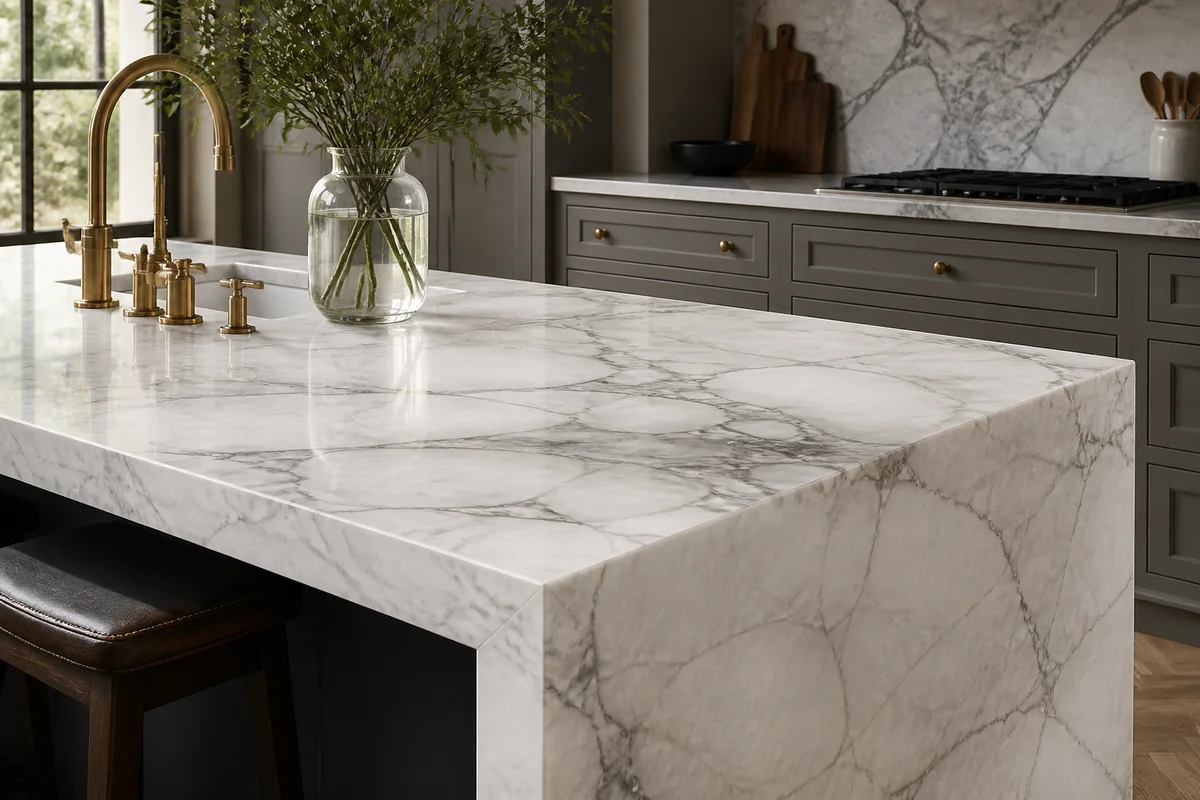
4. Marble: timeless luxury with higher maintenance
Marble is a natural metamorphic stone recognised for luminous colour and distinctive veining. Each slab is unique, and book-matching or vein-matching can create a dramatic island, splashback or waterfall feature.
Most marble is calcite-rich, so acids such as lemon juice and vinegar can etch the surface even when it has been sealed. Sealer helps reduce absorption but does not make marble stain-proof or acid-proof. A honed finish may make normal wear less obvious than a polished finish, but buyers should accept patina as part of the material.
| Best for | Luxury kitchens, feature islands, baking zones and clients who accept natural ageing |
|---|---|
| Available looks | White, cream, grey, green, brown and dramatic multicoloured natural veining |
| Check before ordering | Actual slab, fissures, resin filling, finish, sealing, vein direction, book-match layout and care expectations |
| Main advantage | Unrepeatable natural veining and a premium timeless appearance |
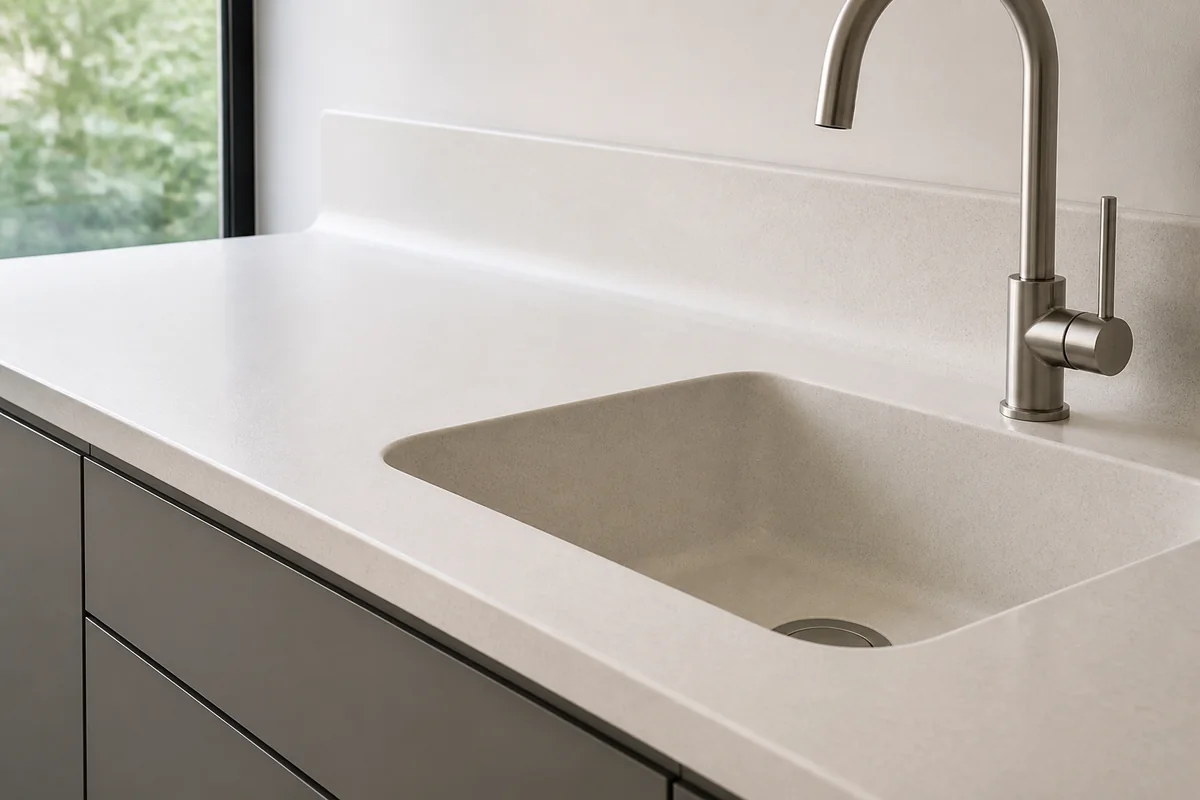
5. Acrylic solid surface: seamless, repairable and easy to shape
Acrylic solid surface is made from acrylic resin, mineral filler and pigments. Sheets can be bonded with colour-matched adhesive, sanded and finished so joints are visually minimal. The material can also be thermoformed into curves and combined with integrated sinks and coved splashbacks.
Its non-porous, uniform surface is practical for residential kitchens, healthcare and hospitality interiors. Scratches can often be sanded and refinished, but the material is softer than stone and can be damaged by direct heat or very hot cookware. Good fabrication requires compatible adhesive, controlled joint preparation and adequate support around cut-outs.
| Best for | Seamless kitchens, integrated sinks, curved forms, healthcare and hospitality counters |
|---|---|
| Available looks | Solid colours, fine mineral effects, translucent accents and selected stone-inspired patterns |
| Check before ordering | Acrylic content, sheet thickness, substrate and support, joint method, sink integration, heat guidance and repair procedure |
| Main advantage | Visually seamless fabrication with integrated details and a renewable surface |
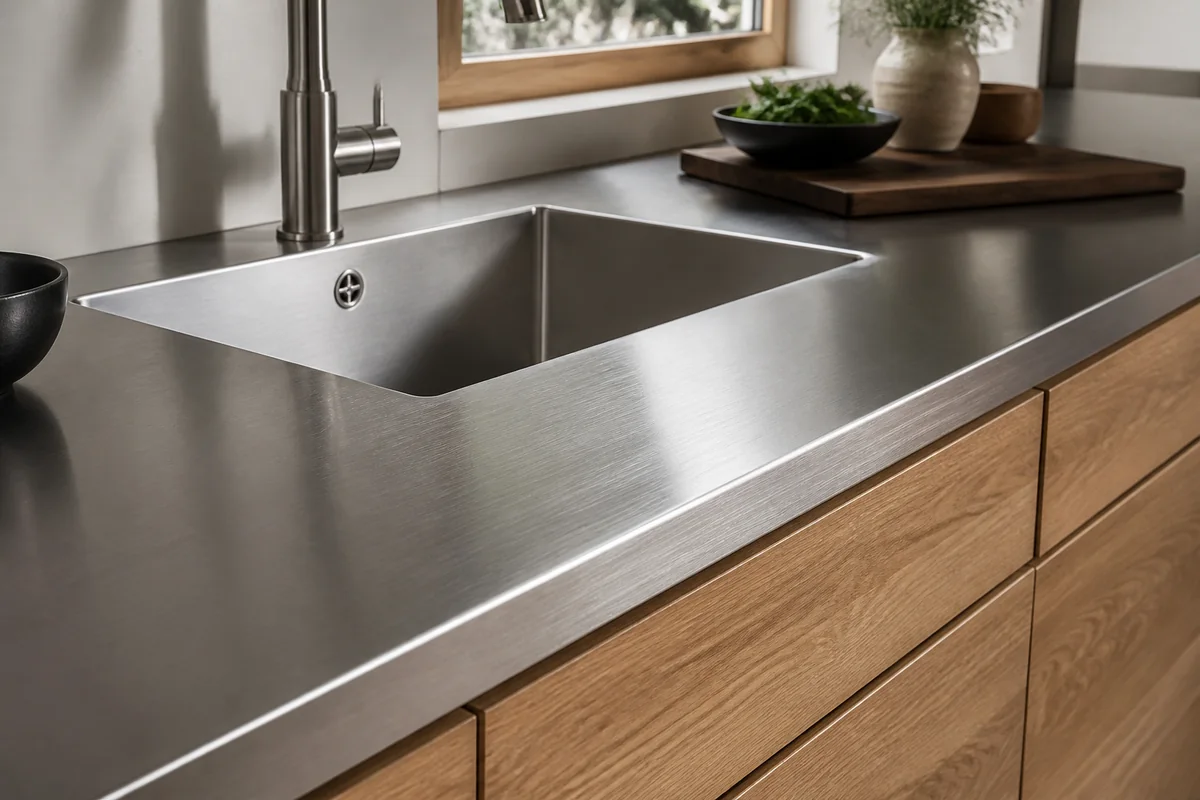
6. Stainless steel: hygienic performance for high-use kitchens
Stainless-steel countertops are fabricated from metal sheet formed over a stable substrate or support frame. Sinks, upstands and drainage details can be welded into the worktop, reducing open joints in wet areas and creating a precise, professional appearance.
The surface is non-porous, heat resistant and easy to clean, which explains its widespread use in commercial kitchens. For residential projects, satin or directional brushed finishes help control glare, but fingerprints and normal scratches remain visible and gradually form a patina. Confirm the steel grade, sheet thickness, internal support, welding, corner radius and brushing direction.
| Best for | High-use kitchens, sink zones, utility rooms, food-service areas and commercial-inspired homes |
|---|---|
| Available looks | Satin brushed, hairline, orbital, embossed and selected coloured or patterned finishes |
| Check before ordering | Steel grade, sheet thickness, substrate, folded edges, welded joints, sink integration, finish direction and dent resistance |
| Main advantage | Hygienic, moisture-resistant work surface with seamless welded options |
Selection recommendations
- For balanced performance and consistent production: engineered quartz is a practical choice for residential and multi-unit kitchens.
- For thin modern profiles, heat resistance or strong UV exposure: consider sintered stone with an experienced fabricator and correctly supported edges.
- For durable natural stone: granite offers strong everyday performance, but approve the actual slab and sealing requirements.
- For luxury veining and natural patina: choose marble only when the client accepts etching, staining risk and careful maintenance.
- For seamless joints, integrated sinks or curved forms: acrylic solid surface is flexible and repairable, but must be protected from direct high heat.
- For hygienic wet zones and intensive use: stainless steel provides strong moisture and heat performance; specify the grade, structure and finish carefully.
No countertop material is installation-proof. Accurate cabinet levelling, adequate support, sensible seam placement, reinforced cut-outs and protected transport are as important as the material itself.
Need help selecting a countertop?
Tell IanProject your kitchen drawings, destination country, preferred colour, edge profile, quantity and target price. We can compare suitable slab materials, coordinate countertop and cabinet production, and match your requirements with an appropriate supplier.
Reference
Countertop structure, quartz, marble, sintered-stone and project-application guidance was informed by IanProject’s internal OULIN cabinet and countertop training materials. The article presents the information as neutral procurement guidance rather than brand-specific product claims.