Cabinet doors define the visible style of a kitchen or wardrobe, but appearance is only one part of the decision. The substrate, surface finish, edge treatment and door construction also influence durability, cleaning, colour consistency, moisture resistance, production time and price.
Names can be confusing because some terms describe the core and others describe only the finish. For example, PET, UV and lacquer doors commonly use MDF, while a melamine door may use particleboard, MDF or plywood.
This guide compares ten widely used cabinet door options and explains where each one performs best.
First understand the complete door
- Core: particleboard, MDF, plywood, OSB, glass or another structural material.
- Face finish: melamine paper, UV coating, PET film, lacquer, PVC membrane, veneer, leather or glass.
- Edge system: ABS/PVC edge banding, continuous membrane wrapping, painted edges or aluminium framing.
- Profile: flat slab, routed design, shaker profile, raised panel or framed glass.
Specify the whole system. A finish name alone is not enough. Confirm the core, thickness, front and back finish, edge material, adhesive, colour, sheen, handle machining and maximum door size.
Cabinet door types compared
| Door type | Typical core | Main strengths | Main limitations | Best use | Price |
|---|---|---|---|---|---|
| Melamine Double-faced panel | Particleboard, MDF or plywood | Cost-effective, consistent, durable and available in many colours and wood grains | Visible edge banding; shaped profiles are limited; damaged faces are difficult to repair | Modern kitchens, wardrobes and volume projects | Low–medium |
| UV-coated | Usually MDF | High-gloss appearance, good colour consistency and easy cleaning | Usually flat; reflections show fingerprints and surface defects; edges require careful finishing | Glossy contemporary kitchens and feature panels | Medium |
| PET-faced | Usually MDF | Refined matte or gloss finish, good colour consistency and easy maintenance | Flat-panel application; performance depends on film, lamination and edge quality | Modern handleless kitchens and wardrobes | Medium |
| Lacquered | MDF or MR MDF | Broad colour choice, seamless painted edges and flat or routed profiles | Higher cost and production time; scratches or chips may require professional repair | Premium kitchens, shaker doors and custom colours | High |
| PVC membrane Thermofoil | Usually routed MDF | Continuous face-and-edge wrapping, many profiles and good value | Heat can affect film or adhesive; local repair is difficult; deep profiles need process control | Shaker, raised-panel and transitional kitchens | Low–medium |
| Wood veneer | Plywood, MDF or LVL-based construction | Authentic grain with better dimensional consistency than wide solid-wood panels | Natural variation, grain matching and finishing quality affect the final result | Premium slab doors, feature walls and warm contemporary interiors | High |
| Leather-faced | OSB, plywood or engineered panel with metal frame | Tactile luxury, distinctive appearance and strong wardrobe feature value | Specialist material; higher price; colour and abrasion performance need verification | Wardrobes, dressing rooms and decorative feature doors | Premium |
| Aluminium-frame glass | Tempered glass with aluminium frame | Light visual weight, easy cleaning and premium display effect | Contents remain visible; fingerprints and impact risk require consideration | Display cabinets, wall units, wardrobes and accent doors | High–premium |
| Solid wood | Solid timber frame with a solid or engineered centre panel | Authentic timber character, repairable finish and premium joinery | Higher cost; natural movement and colour variation require careful construction | Premium traditional, shaker and transitional kitchens | Premium |
| Stainless steel | Brushed stainless-steel facing over a stable core, or formed steel construction | Hygienic, moisture resistant, durable and easy to clean | Fingerprints, scratches and dents can show; grade and edge fabrication matter | Wet zones, high-use kitchens and contemporary projects | High–premium |
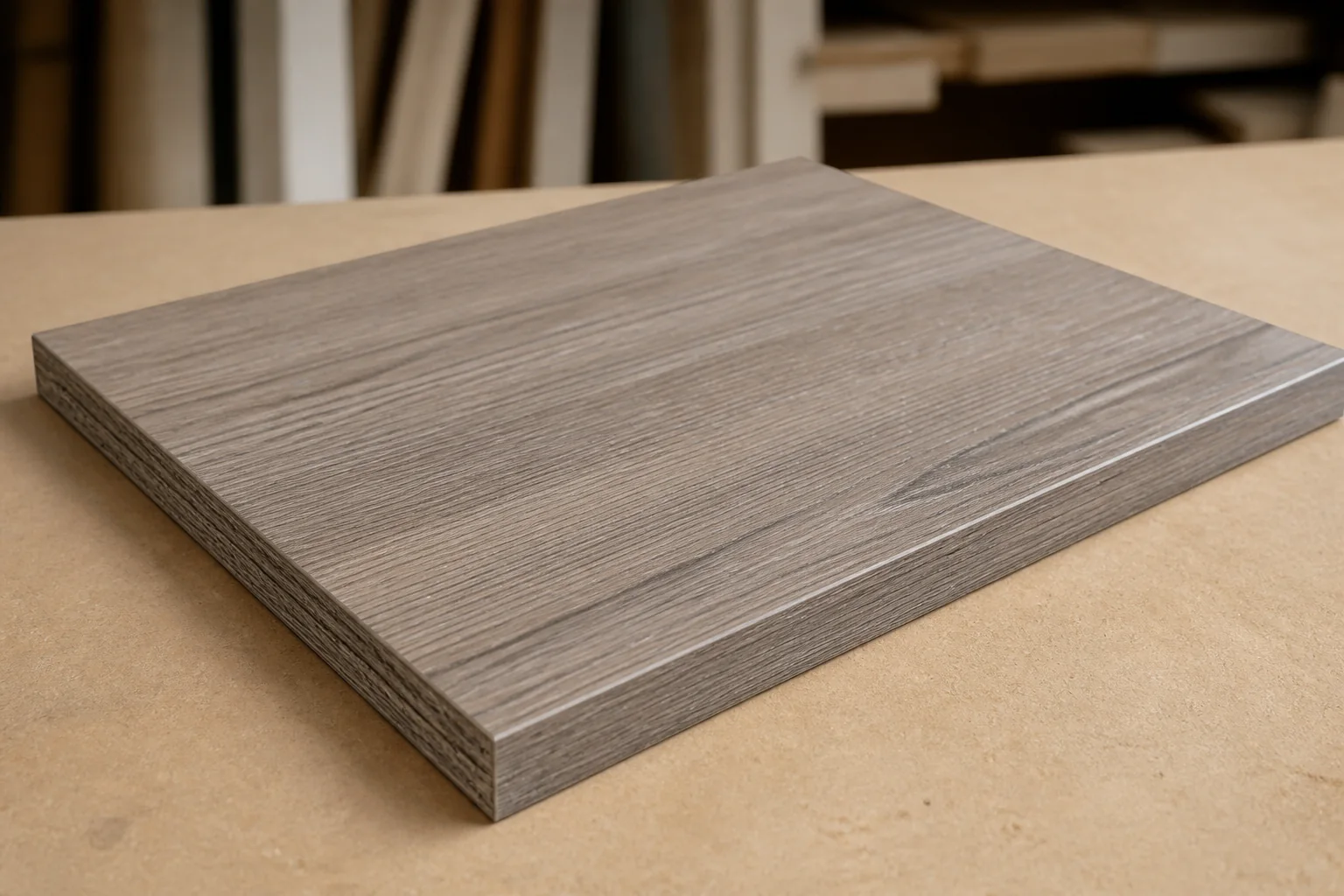
1. Melamine doors: practical, consistent and cost-effective
Melamine doors are produced by pressing resin-impregnated decorative paper onto a wood-based core. Particleboard is common for standard flat doors, while MDF or plywood may be selected when the project requires a different weight, fixing performance or moisture specification.
The surface can reproduce solid colours, textiles, stone patterns and realistic wood grains. Because the face is factory-finished, production is efficient and colour matching is generally consistent. The main quality checkpoints are the substrate, surface grade, edge banding, adhesive line and corner finishing.
| Best for | Modern slab doors, wardrobes, apartments, rental projects and volume orders |
|---|---|
| Available looks | Wood grain, solid colour, textile, stone, super-matte and embossed textures |
| Check before ordering | Core type, thickness, surface code, grain direction, ABS/PVC edge thickness and glue line |
| Main advantage | Balanced cost, durability and production consistency |
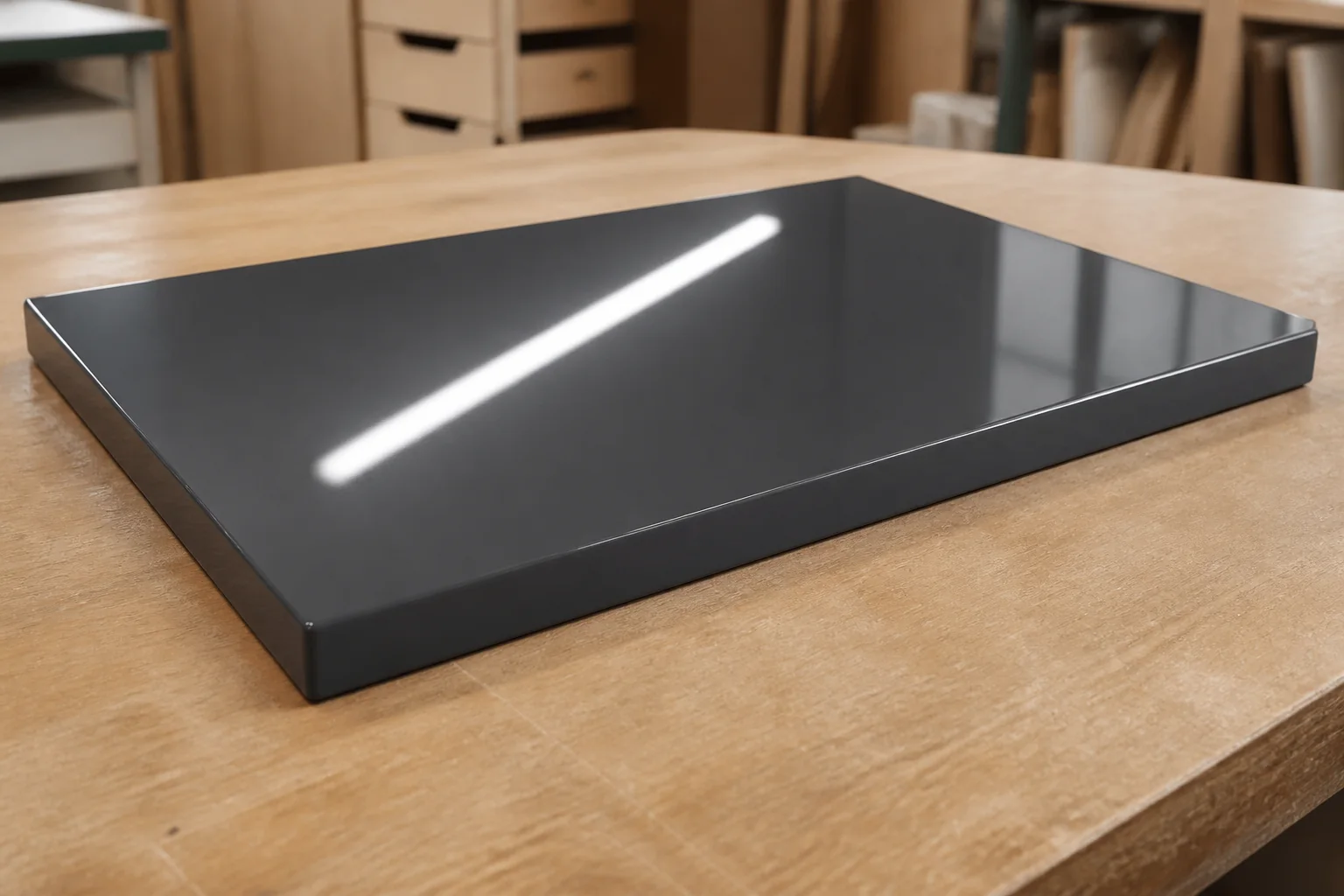
2. UV-coated doors: polished high gloss for modern interiors
UV doors use a coating that is cured under ultraviolet light to form a hard, smooth decorative surface. MDF is commonly used because its flat, uniform face supports a consistent high-gloss finish.
These doors suit clean contemporary designs and are easy to wipe, but the reflective surface can reveal fingerprints, dust, scratches and uneven substrate preparation. Buyers should inspect gloss level, colour uniformity, protective film, edge match and the reverse-side finish.
| Best for | Contemporary glossy kitchens, wall units and feature panels |
|---|---|
| Available looks | Solid high gloss, metallic effects and selected decorative patterns |
| Check before ordering | Coating uniformity, gloss level, scratch performance, edge material, backing and protective film |
| Main advantage | Bright, smooth appearance with efficient factory production |
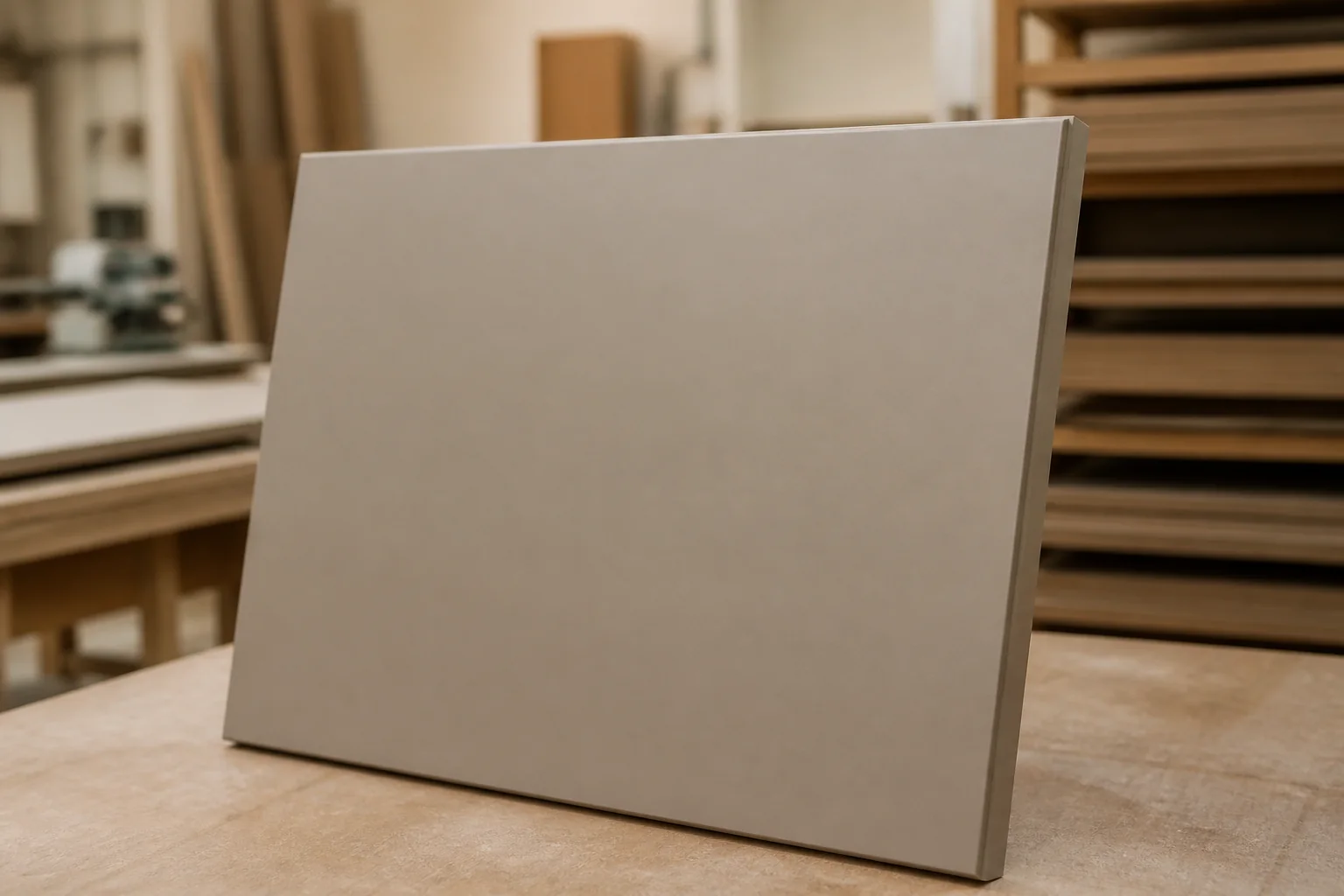
3. PET doors: refined matte surfaces for handleless designs
PET doors use a polyester-based decorative film laminated to a smooth panel, most often MDF. The finish may be matte, soft-touch or high gloss, although super-matte anti-fingerprint surfaces are especially popular in modern kitchens.
PET gives a consistent colour and pleasant tactile finish. Door performance depends on the quality of the film, lamination, adhesive and edge banding. A good sample review should include fingerprint visibility, scratch behaviour, edge colour and resistance to household cleaning products.
| Best for | Handleless kitchens, minimalist wardrobes and contemporary flat-panel furniture |
|---|---|
| Available looks | Super-matte, soft-touch, satin, gloss and solid colours |
| Check before ordering | Film supplier, surface sheen, anti-fingerprint claim, edge match, adhesive and cleaning instructions |
| Main advantage | Uniform modern finish with comfortable touch and easy maintenance |
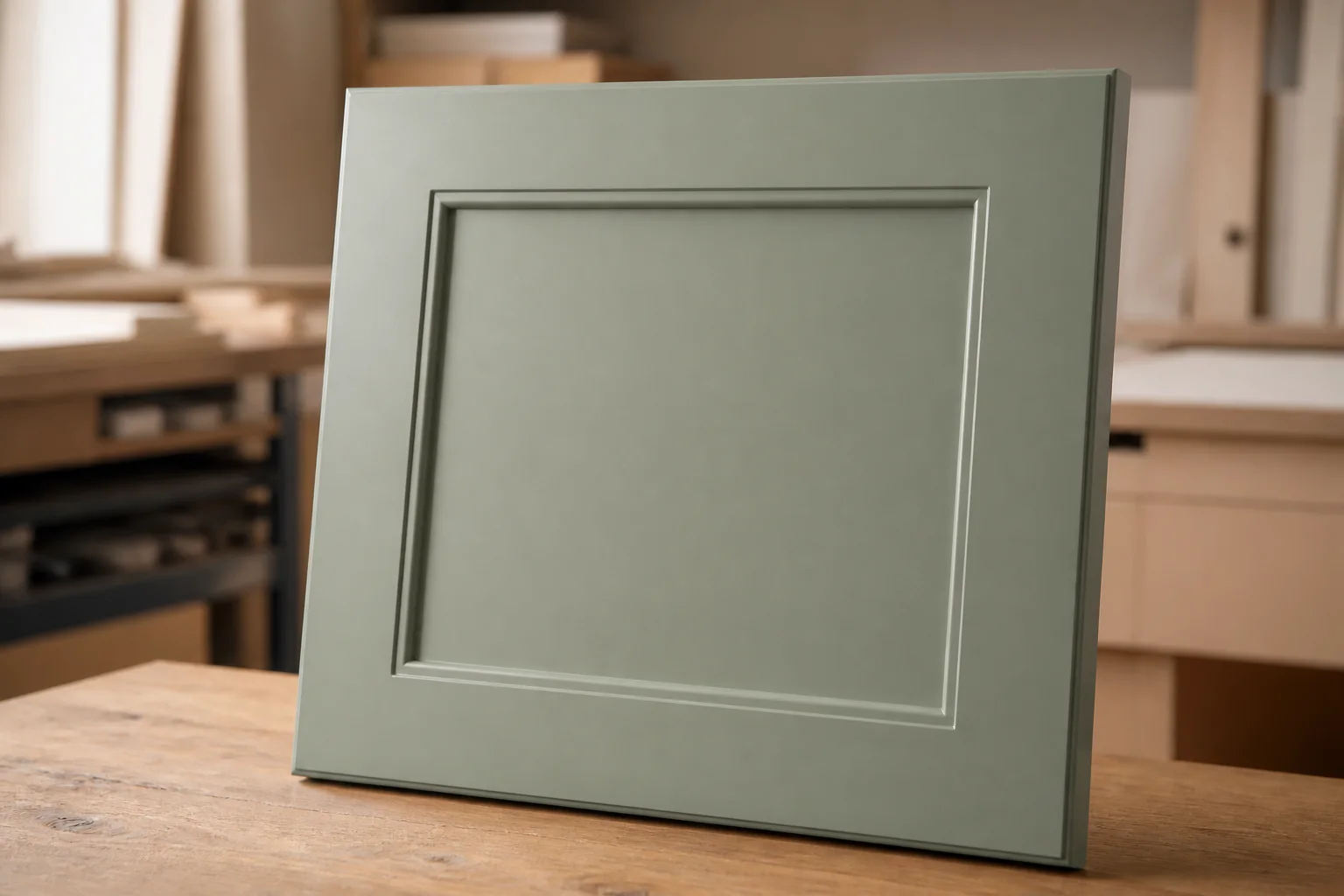
4. Lacquered doors: custom colour and flexible profiling
Lacquered doors are normally made from MDF that is sanded, primed, coated and cured through multiple finishing stages. They can be produced as flat slabs, shaker doors, routed panels or integrated-handle profiles.
The continuous coating creates seamless faces and edges and allows broad colour control. Quality varies with substrate preparation, coating system, film build, curing and polishing. Lacquer is premium rather than indestructible: sharp impacts can chip edges and dark high-gloss colours show marks more easily.
| Best for | Custom-colour kitchens, shaker doors, routed designs and premium residential projects |
|---|---|
| Available looks | Matte, satin, high gloss, metallic and colour-matched finishes |
| Check before ordering | Paint system, layer schedule, sheen tolerance, colour sample, edge coverage and repair process |
| Main advantage | Extensive colour choice with flat or shaped door flexibility |
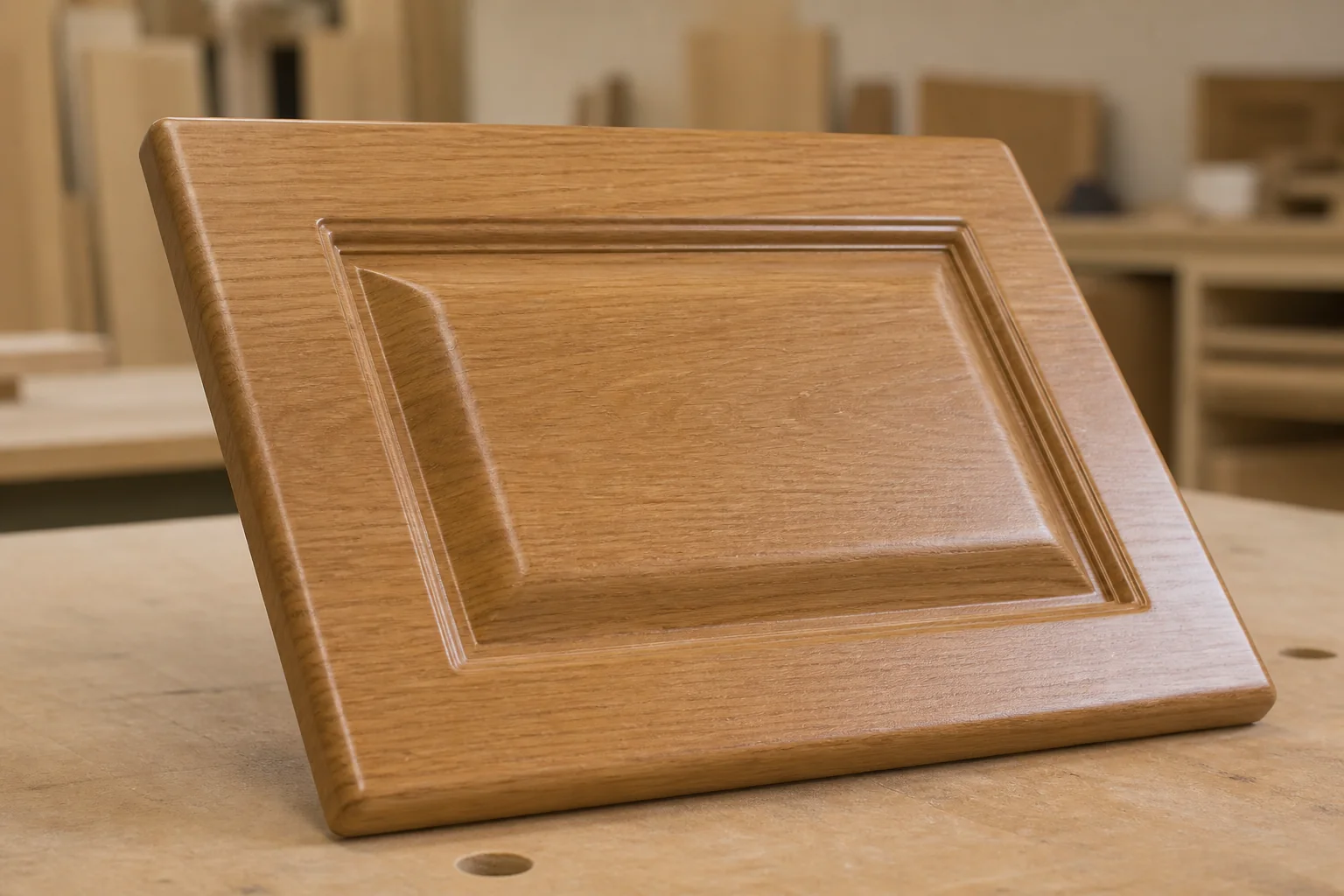
5. PVC membrane doors: shaped profiles without separate edge banding
PVC membrane doors, also called thermofoil or vacuum-formed doors, use a heated film drawn over a routed MDF face under vacuum. The film wraps the front and edges in one continuous layer, making it suitable for shaker and raised-panel designs.
This method delivers many styles at a competitive price, but film, adhesive, temperature control and routing geometry must work together. Heat near ovens, steam appliances or direct sunlight can stress low-quality films or bonding, so installation clearances and heat shields matter.
| Best for | Shaker, raised-panel, transitional and cost-conscious decorative kitchens |
|---|---|
| Available looks | Wood grain, solid colour, matte, gloss and selected textured films |
| Check before ordering | Film brand and thickness, adhesive, vacuum process, reverse finish, heat clearance and corner definition |
| Main advantage | Continuous wrapped finish across routed faces and edges |
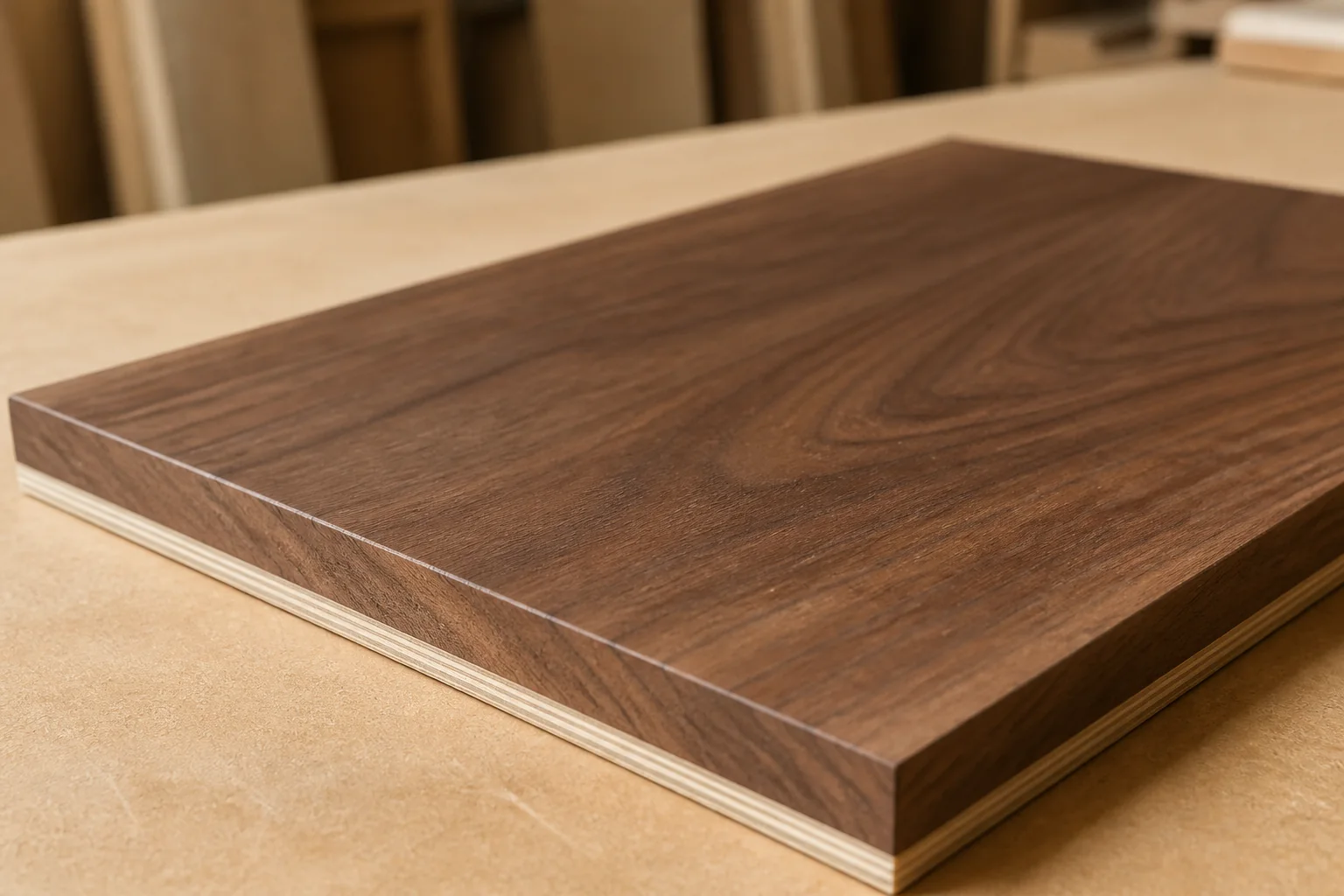
6. Wood veneer doors: authentic grain with an engineered core
Wood veneer doors use thin slices of real timber bonded to a stable panel such as plywood or MDF. The construction preserves natural grain while reducing the movement and material cost associated with wide solid-wood panels.
Every veneer sheet is naturally different, so grain selection, book matching, sequence matching, stain and clear coating have a major effect on the result. Samples should represent the approved species, cut, colour range and finish—not only a generic wood name.
| Best for | Premium slab doors, islands, feature walls, wardrobes and warm contemporary interiors |
|---|---|
| Available looks | Oak, walnut, ash and other species in natural, stained or painted finishes |
| Check before ordering | Species, veneer cut, grain direction, matching method, core, edge treatment, stain and coating sample |
| Main advantage | Real wood appearance with practical panel stability |
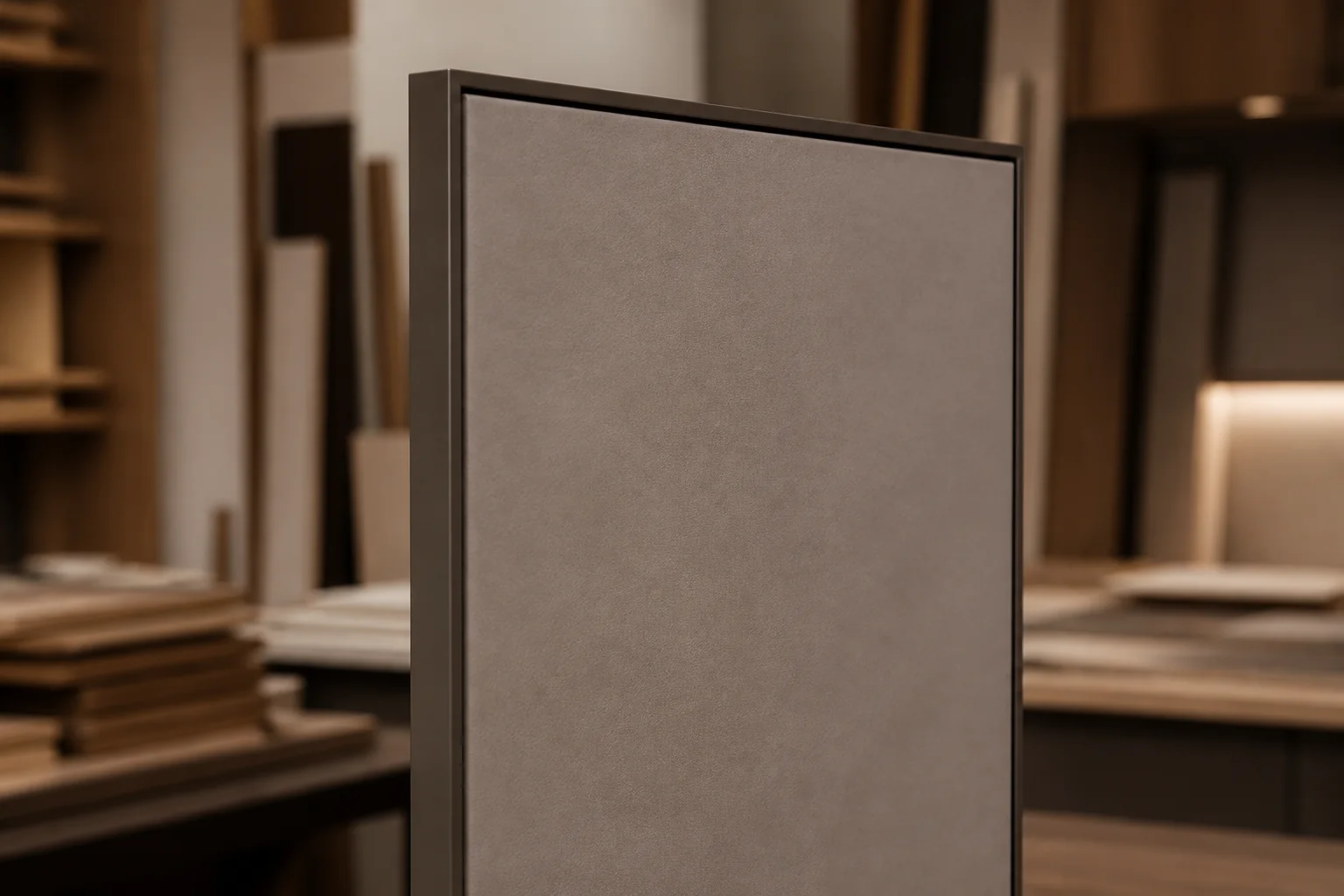
7. Leather-faced doors: tactile detail for premium wardrobes
Leather-faced doors use natural leather, microfibre leather or another engineered leather surface over a stable board, often combined with an aluminium frame. They are selected primarily for visual and tactile impact rather than for standard kitchen volume.
The surface can soften a wardrobe or dressing-room design and coordinate with upholstered interiors. Buyers should verify the exact leather type, abrasion resistance, colourfastness, cleanability, seam or corner treatment and frame finish.
| Best for | Wardrobes, dressing rooms, bedside storage and decorative feature panels |
|---|---|
| Available looks | Fine grain, stitched detail, smooth leather, microfibre and framed panels |
| Check before ordering | Leather composition, abrasion and colourfastness data, cleaning method, bonding, corners and frame finish |
| Main advantage | Distinctive tactile luxury for feature cabinetry |
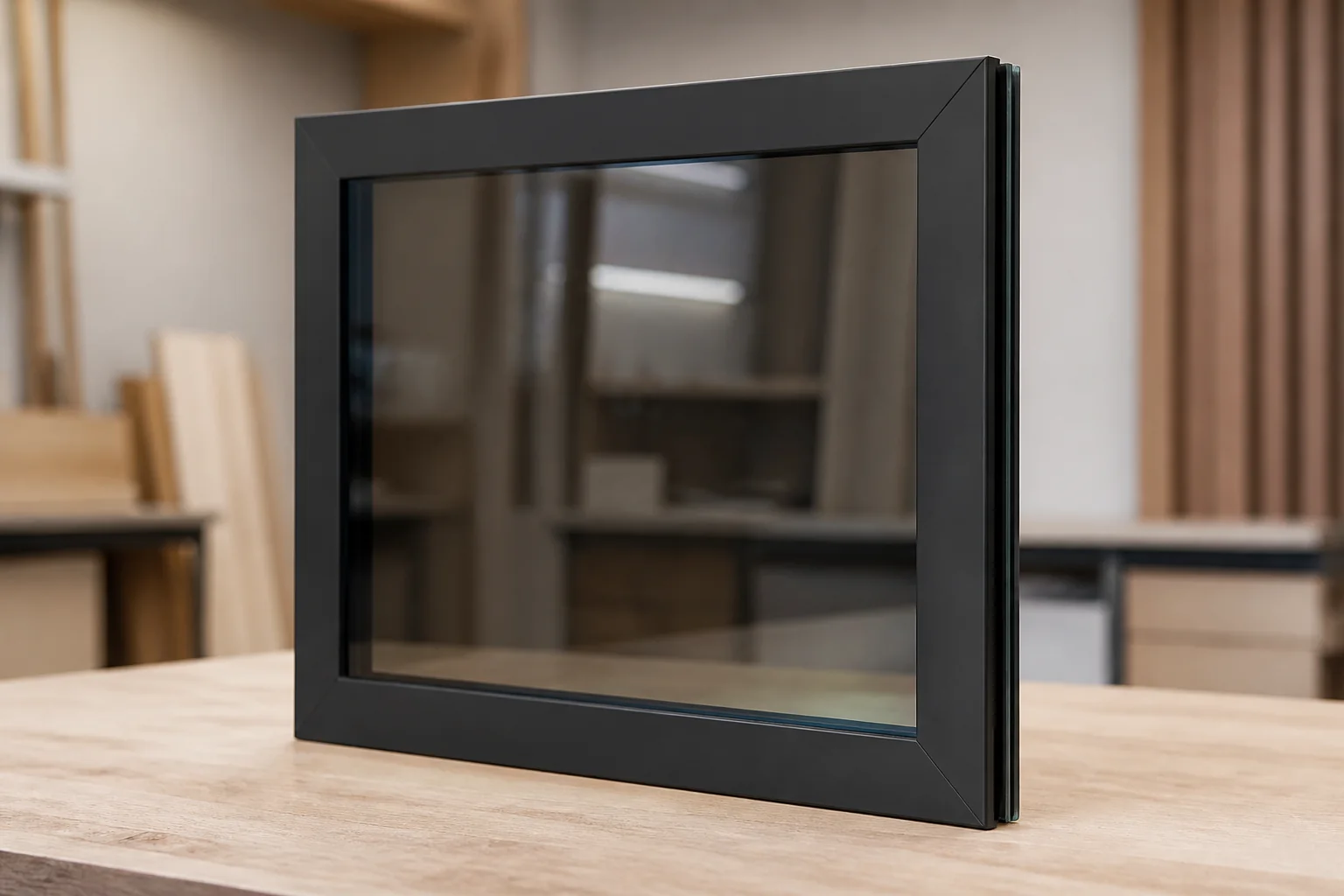
8. Aluminium-frame glass doors: light, modern and display-focused
These doors combine clear, fluted, tinted or opaque glass with a slim aluminium frame. They introduce transparency and contrast without relying on a wood-based face panel, making them useful for display cabinets and feature zones.
Safety and hardware selection are critical. Specify the glass type and thickness, edge treatment, safety film or tempering, frame finish, corner joint, hinge compatibility and maximum door size. Smoked or textured glass can reduce visual clutter compared with fully clear glass.
| Best for | Wall cabinets, display units, wardrobes, wine storage and premium accent doors |
|---|---|
| Available looks | Clear, smoked, bronze, fluted, frosted, wired-look and opaque glass |
| Check before ordering | Tempered glass, thickness, safety treatment, frame alloy and finish, joints, hinges and size limits |
| Main advantage | Premium visual lightness with strong design contrast |
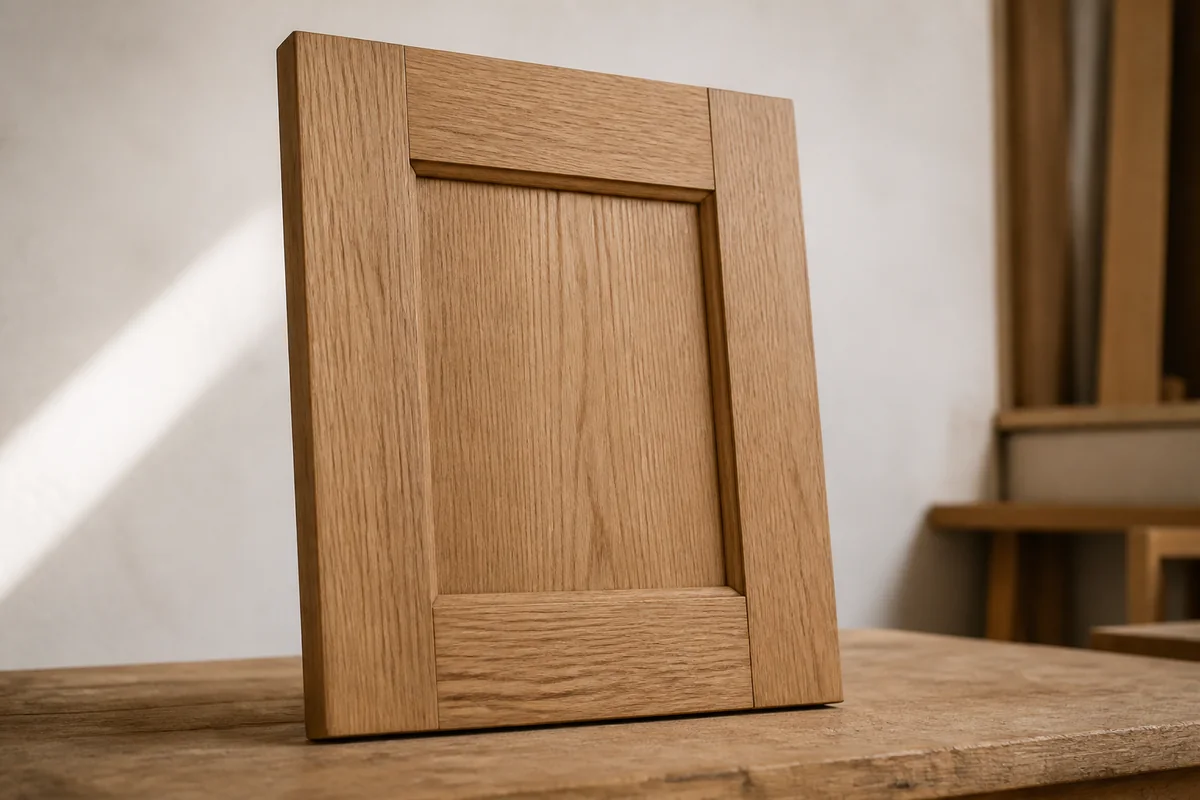
9. Solid wood doors: authentic timber and traditional joinery
Solid wood doors are normally constructed from timber rails and stiles surrounding a centre panel. Oak, ash, maple, walnut and other species create genuine grain, depth and colour variation that printed surfaces cannot fully reproduce. Depending on the design, the centre may be solid timber or an engineered panel selected to improve dimensional stability.
Timber expands and contracts as humidity changes, so kiln drying, moisture content, grain selection, joint design and coating quality all matter. A well-made door can be sanded, repaired or refinished, but natural variation must be accepted and approved through representative samples. Buyers should also distinguish true solid-wood construction from a veneer-faced board.
| Best for | Premium kitchens, shaker doors, traditional furniture and warm transitional interiors |
|---|---|
| Available looks | Natural, stained, painted, wire-brushed, distressed, shaker and raised-panel designs |
| Check before ordering | Species, solid versus engineered centre, moisture content, joints, grain matching, coating and colour range |
| Main advantage | Authentic material character with repairable, long-lasting joinery |
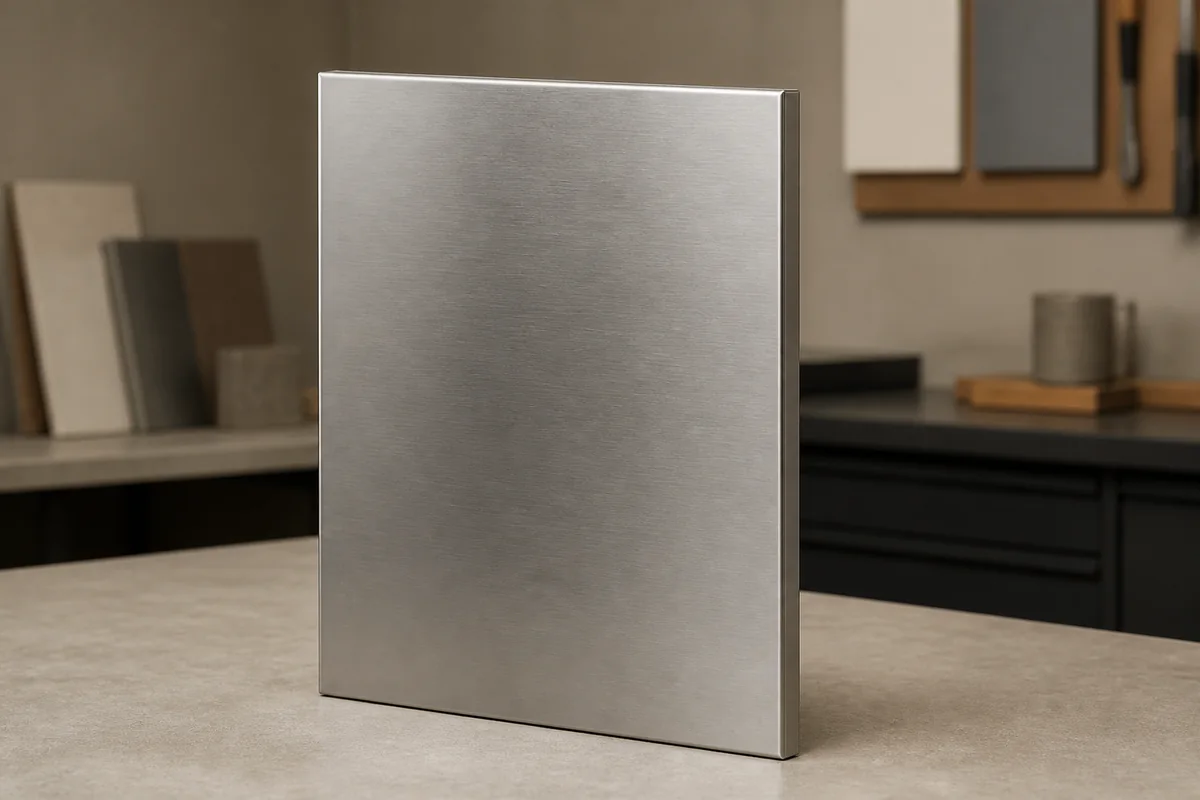
10. Stainless steel doors: durable performance for wet and high-use areas
Stainless steel cabinet doors usually use a thin metal facing folded over a stable core, although formed or framed constructions are also available. The non-porous surface is easy to wipe and suits wet zones, high-use kitchens and contemporary interiors where durability and a precise industrial appearance are priorities.
Not every stainless-steel door performs the same way. Confirm the alloy grade, sheet thickness, core material, edge construction, brushing direction and surface protection. Grade 304 is widely specified for many indoor applications, but the correct grade still depends on moisture, salt exposure, cleaning chemicals and the project environment. Satin surfaces reduce glare, yet fingerprints, fine scratches and dents may remain visible.
| Best for | Sink zones, utility rooms, high-use kitchens, commercial-inspired interiors and contemporary accents |
|---|---|
| Available looks | Satin brushed, hairline, embossed, coloured PVD and selected patterned finishes |
| Check before ordering | Steel grade, sheet thickness, core, folded edges, welds or joints, brushing direction and protective film |
| Main advantage | Strong moisture resistance, hygienic maintenance and a precise modern appearance |
Selection recommendations
- For cost-effective volume kitchens: choose melamine doors with verified core and precise edge banding.
- For modern high gloss: choose UV when a flat reflective surface and efficient production are priorities.
- For super-matte handleless designs: PET offers a consistent modern finish; approve the exact film and edge sample.
- For custom colours or routed doors: lacquer provides the greatest design flexibility but needs a controlled finishing process.
- For affordable shaker and raised profiles: PVC membrane is practical when film, adhesive and heat clearances are properly specified.
- For authentic natural grain with a stable panel: use wood veneer and define the species, cut, matching and stain range.
- For luxury wardrobes: leather-faced doors work best as selected feature elements rather than every door.
- For display and visual contrast: use aluminium-frame glass with the correct safety glass and compatible hinges.
- For authentic traditional or premium timber: choose solid wood and verify the species, moisture content, joints and centre-panel construction.
- For wet, high-use or commercial-inspired spaces: consider stainless steel and confirm the grade, core, sheet thickness and edge fabrication.
Always approve a complete door sample. Review the face, edge, reverse, corner, colour, sheen and handle machining under the lighting expected in the finished project.
Need help selecting cabinet doors?
Tell IanProject your cabinet drawings, preferred style, destination country, target price and quantity. We can compare suitable door constructions and match your requirements with an appropriate cabinet manufacturer.
Reference
Door construction, finish and application guidance was informed by IanProject’s internal OULIN cabinet-door and custom-home product training materials. The article presents the information as neutral procurement guidance rather than brand-specific product claims.