When choosing kitchen cabinets, buyers often focus first on the colour and door style. However, the material hidden beneath the surface has a major influence on cabinet stability, moisture resistance, machining, weight, price and service life.
Plywood, particleboard and MDF are not simply “good, better and best.” Each material has a different structure and is suitable for different parts of a cabinet. A well-designed project may use one board for the carcass and another for painted or shaped doors.
This guide explains how the main cabinet board types differ and how to select the right combination for your project.
First understand the board structure
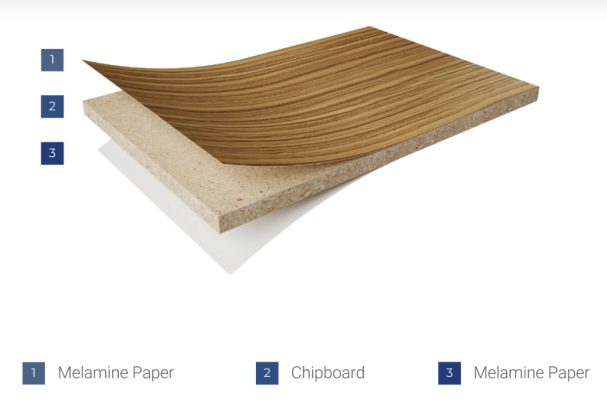
- Surface layer: the visible finish, such as melamine, wood veneer, lacquer, PET, PVC or HPL.
- Core layer: the substrate that provides most of the panel’s structure, such as plywood, particleboard or MDF.
- Backing layer: a balancing layer that helps the panel remain flat and stable.
Do not confuse the substrate with the finish. “Melamine cabinet” usually describes a melamine-faced board; the core underneath may be particleboard, MDF or plywood.
Cabinet board types compared
| Board type | Structure | Main strengths | Main limitations | Typical cabinet use | Price level |
|---|---|---|---|---|---|
| Plywood Multi-layer board | Thin wood veneers bonded in alternating grain directions | Good structural stability, screw holding and moisture tolerance when correctly specified | Higher cost; edge layers may remain visible; quality varies with veneer and glue | Premium carcasses, sink cabinets, vanities, shelves and demanding projects | High |
| Particleboard Chipboard | Wood particles bonded with resin and pressed into a uniform panel | Cost-effective, consistent thickness, flat surface and efficient large-scale production | Edges need protection; prolonged water exposure can cause swelling; repeated screw removal can weaken fixing points | Melamine-faced carcasses, wardrobes, RTA furniture and volume projects | Low–medium |
| MDF | Fine wood fibres bonded with resin under heat and pressure | Smooth, uniform surface; excellent for paint, routing, grooves and shaped profiles | Heavy; standard MDF is vulnerable to water; edges require careful sealing | Lacquered, PET, PVC-wrapped and decorative door panels | Medium |
| Solid wood | Natural timber cut and machined into rails, stiles, panels or boards | Authentic grain, premium appearance, good repairability and strong fixing | Higher cost; natural colour variation; movement with humidity must be allowed for | Premium doors, frames, trims, mouldings and selected visible components | High–premium |
| OSB | Long wood strands arranged in oriented layers and bonded under pressure | Strong structural performance, efficient wood use and distinctive texture | Coarse appearance; exposed edges need finishing; uncommon in conventional cabinet interiors | Industrial-style panels, selected structural parts and project-specific applications | Low–medium |
| Eco-board Chinese market term | Usually a melamine-faced plywood or wood-strip-core panel; the exact core varies by supplier | Ready-finished surface, convenient processing and practical cabinet application | Not a universal technical grade; quality and performance depend on the actual core, adhesive and facing | Wardrobes, cabinet carcasses, shelves and interior furniture when the core is verified | Medium |
| MR particleboard Green-core moisture-resistant particleboard | Wood particles bonded with a moisture-resistant resin formulation; green dye is commonly added for identification | Cost-effective, consistent and more resistant to humidity than standard particleboard when correctly specified | Not waterproof; exposed edges can still swell; green colour alone does not verify the grade | Kitchen and vanity carcasses, laundry cabinets and humid-region projects | Medium |
| MR MDF Green-core moisture-resistant MDF | Fine wood fibres bonded into a dense, uniform panel using a moisture-resistant formulation | Smooth machining and finishing with better humidity resistance than standard MDF | Heavy and not waterproof; routed edges, holes and cut-outs still require sealing | Painted, routed, PVC-wrapped or decorative doors in kitchens and humid interiors | Medium–high |
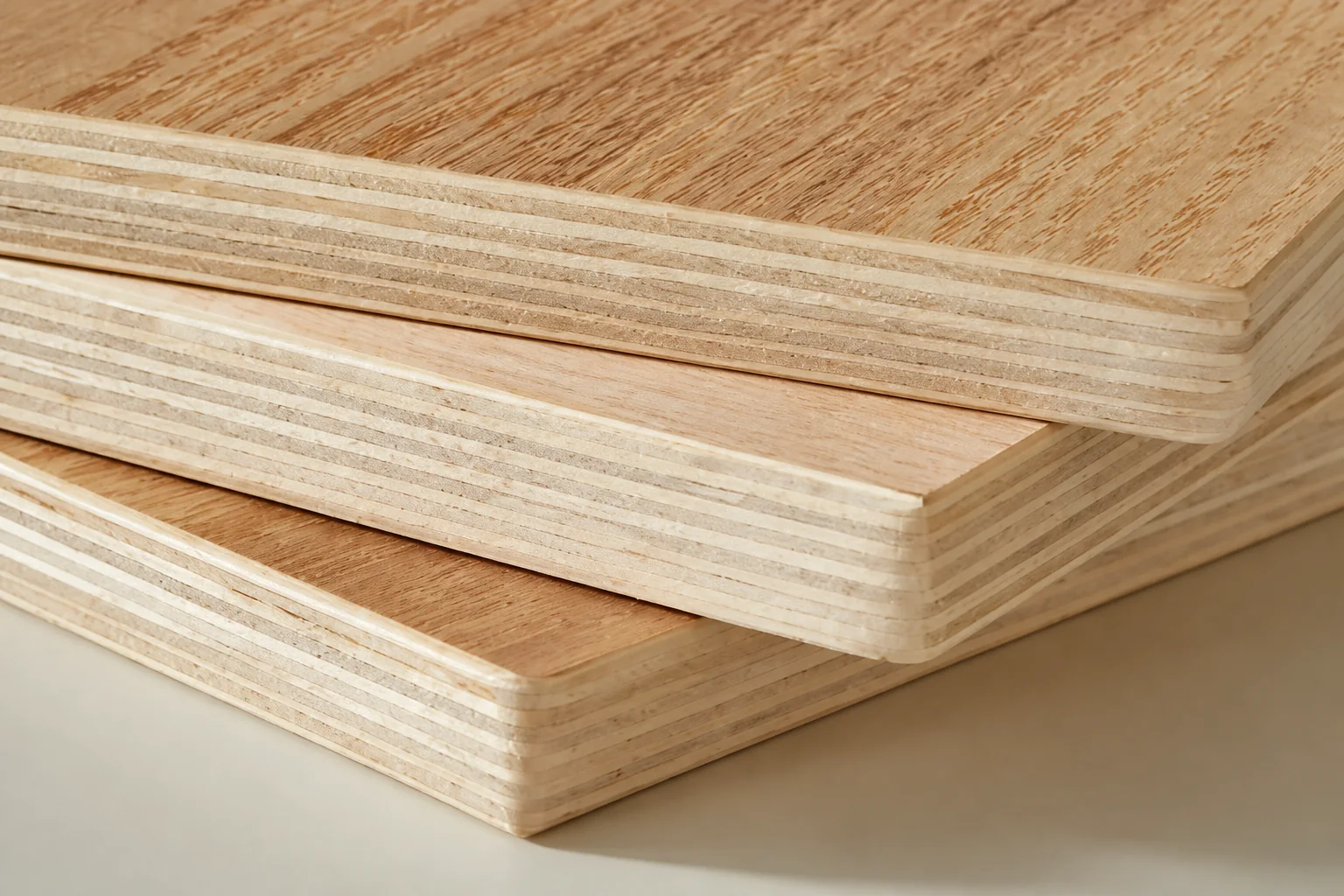
1. Plywood: strong and stable for demanding areas
Plywood is manufactured from thin wood veneers. Adjacent layers normally run in different grain directions, helping the panel resist movement and distribute loads more evenly than a single piece of solid wood.
For cabinetry, plywood is valued for good screw holding and practical moisture tolerance. It is frequently specified for sink cabinets, bathroom vanities, long shelves and premium carcasses. It is not automatically waterproof: performance depends on the wood species, veneer quality, adhesive system, face finish and edge sealing.
| Best for | Premium carcasses, moisture-prone zones and structures requiring reliable fixing |
|---|---|
| Common surfaces | Melamine, HPL, natural wood veneer and lacquer-compatible finishes |
| Check before ordering | Number and quality of plies, core gaps, glue class, surface grade, thickness tolerance and edge treatment |
| Main advantage | Strong all-round structural performance |
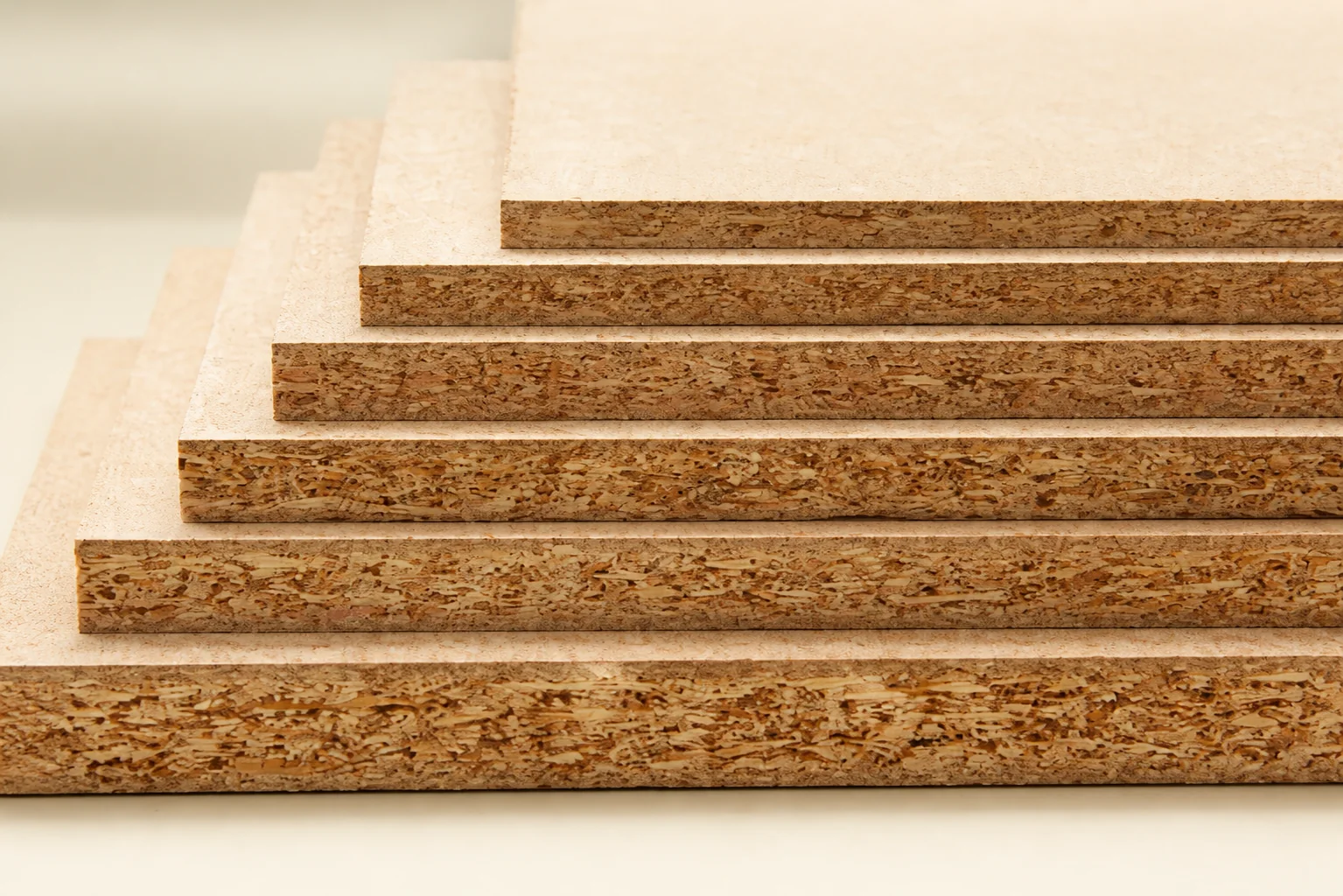
2. Particleboard: practical and cost-effective
Particleboard is made from wood particles bonded with resin and pressed into a flat panel. Its uniform thickness and efficient use of wood resources make it one of the most common substrates for cabinet carcasses and ready-to-assemble furniture.
A well-made moisture-resistant particleboard with correctly sealed edges can perform reliably in normal kitchen use. Problems usually arise when unprotected edges are exposed to standing water or when unsuitable low-density boards are used around heavily loaded fittings.
| Best for | Standard carcasses, wardrobes, apartment projects and price-sensitive volume orders |
|---|---|
| Common surfaces | Melamine, HPL, PET and decorative laminates |
| Check before ordering | Density, moisture-resistant grade, edge-banding quality, screw tests and hardware fixing points |
| Main advantage | Balanced cost, consistency and production efficiency |
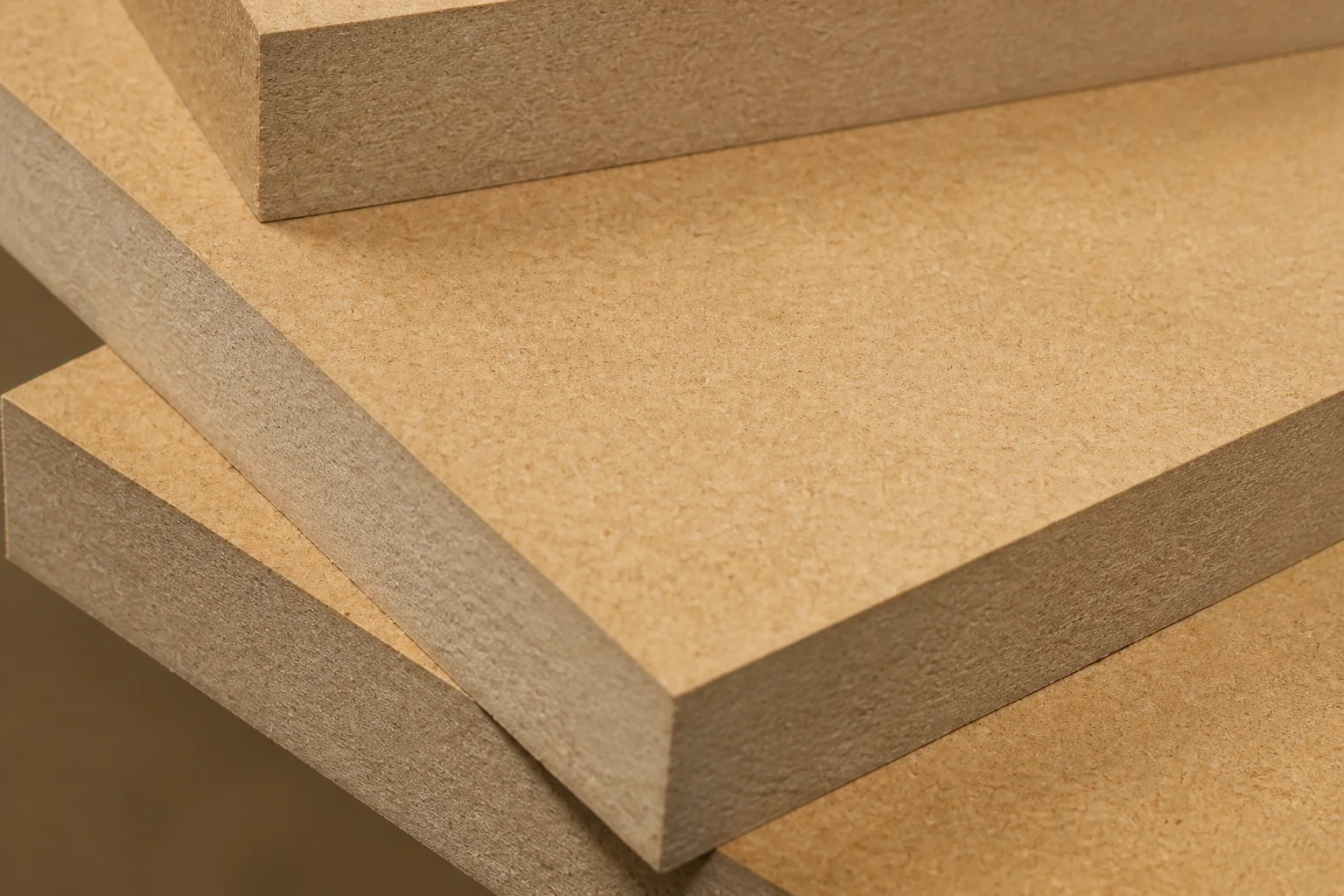
3. MDF: the preferred core for smooth and shaped doors
Medium-density fibreboard is produced from refined wood fibres mixed with resin and pressed into a dense, uniform panel. Because it has no visible chips or veneer layers, its faces and edges can be machined smoothly.
MDF is especially suitable for lacquered doors, routed profiles, grooves, curved details and PVC-wrapped fronts. Standard MDF should not be used where it may absorb water. Moisture-resistant MDF improves performance in humid environments, but exposed edges and drilled areas still need proper sealing.
| Best for | Painted doors, shaker-style profiles, decorative fronts and precision machining |
|---|---|
| Common surfaces | Lacquer, PET, PVC membrane, UV coating, wood veneer and melamine |
| Check before ordering | Standard or moisture-resistant grade, density, surface sanding, edge sealing and final coating system |
| Main advantage | Excellent surface quality and design flexibility |
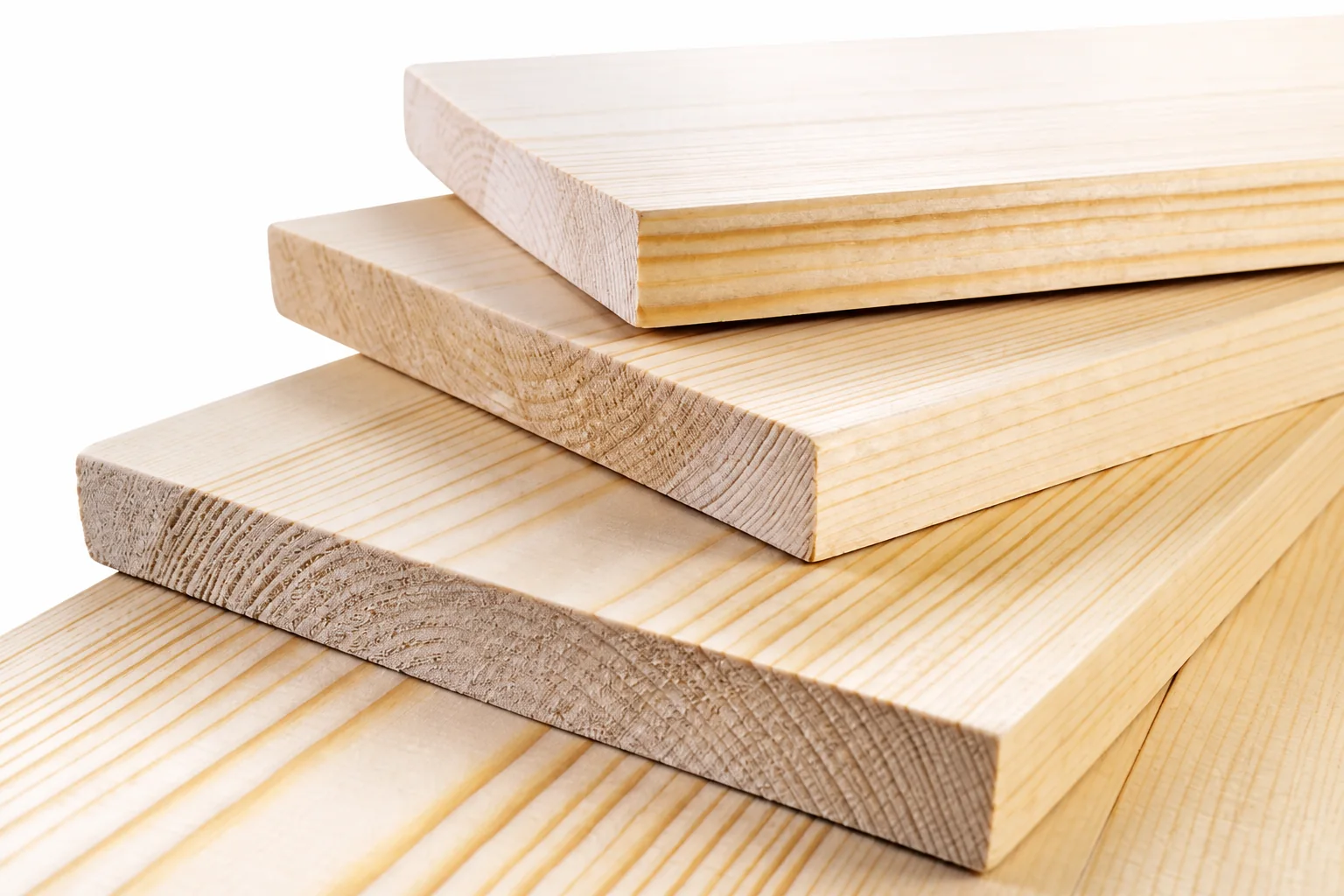
4. Solid wood: natural character for premium cabinet details
Solid wood is natural timber rather than a reconstituted panel. In cabinetry, it is commonly machined into door frames, rails, stiles, mouldings, trims and other visible components. Its grain, colour variation and ability to be refinished give it a premium, authentic appearance.
Wood naturally responds to changes in temperature and humidity. Good construction therefore uses properly dried timber, stable species, suitable joints and panel designs that allow controlled movement. Solid wood is not automatically the best material for every carcass: wide panels can expand, shrink, cup or warp if moisture content and construction are poorly controlled.
| Best for | Premium doors, frames, mouldings, trims, islands and visible decorative elements |
|---|---|
| Common surfaces | Clear lacquer, stain, paint, oil and other timber-compatible coatings |
| Check before ordering | Wood species, moisture content, grade, colour variation, joint construction, coating system and repair allowance |
| Main advantage | Natural grain, premium appearance and long-term repairability |
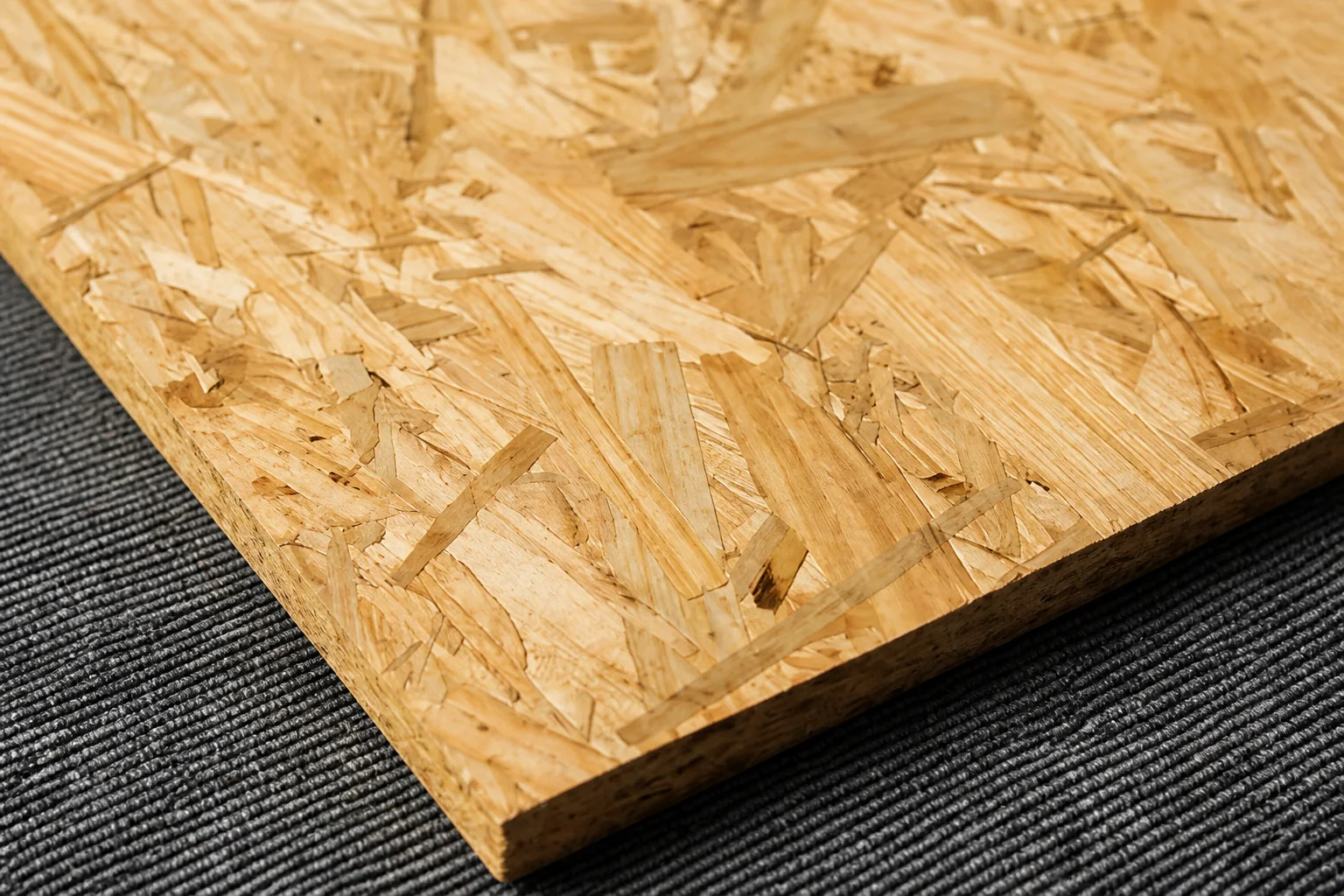
5. OSB: structural strength with a distinctive strand texture
Oriented strand board is made from long, thin wood strands arranged in layers, bonded with resin and pressed under heat. The strands in adjoining layers are oriented in different directions to improve strength and dimensional performance.
OSB is widely used as a structural panel, but it is less common in conventional finished kitchen interiors because of its coarse surface and visible strands. It can be appropriate for industrial-style cabinetry, workshop storage, concealed structural components or project-specific designs when the selected grade, surface finish and edge protection meet the application.
| Best for | Industrial-style furniture, selected structural parts, utility storage and special-design projects |
|---|---|
| Common surfaces | Clear coating, paint, laminate or intentionally exposed strand texture |
| Check before ordering | Panel grade, intended service condition, thickness, edge swelling, surface smoothness, coating compatibility and formaldehyde compliance |
| Main advantage | Efficient structural panel with a recognisable natural-strand appearance |
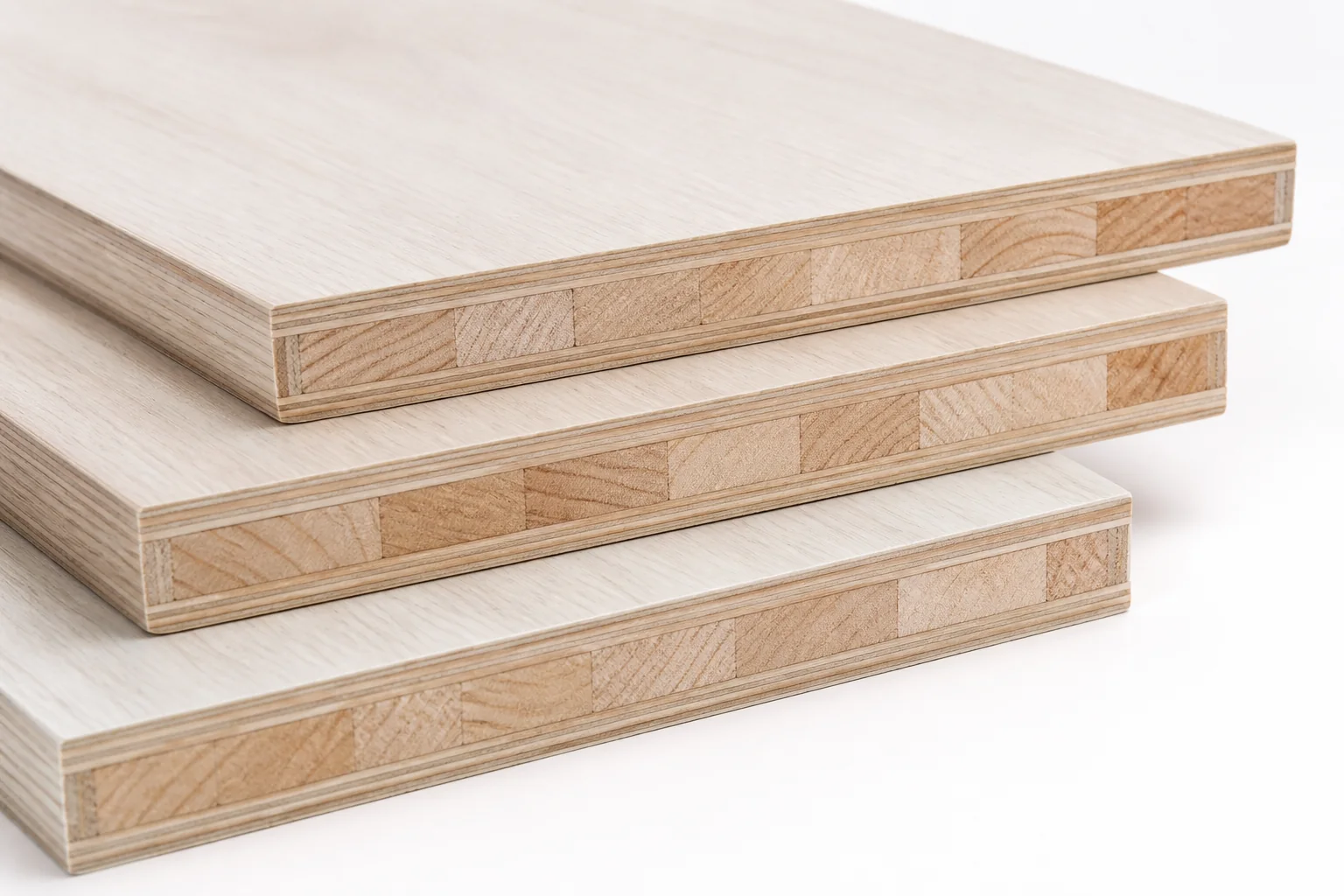
6. Eco-board: verify the core behind the marketing name
“Eco-board” is a common Chinese market term rather than one internationally standardised board type. It usually refers to a ready-finished panel with melamine decorative faces over a plywood or wood-strip core. Some suppliers use the same name for other substrates, so the label alone does not identify the structure.
Eco-board can be convenient for wardrobes, cabinet carcasses, shelves and interior furniture because the surface is already finished and requires no additional painting. Its stability, moisture resistance, screw holding and emission performance depend on the actual core material, adhesive, facing quality and edge sealing—not on the word “eco.”
| Best for | Wardrobes, cabinet carcasses, shelves and interior furniture when the specified core suits the application |
|---|---|
| Common surfaces | Melamine decorative paper in solid colours, wood grains and other printed patterns |
| Check before ordering | Exact core type, board manufacturer, strip or veneer quality, internal gaps, adhesive, surface bonding, edge sealing and emission report |
| Main advantage | Ready-finished decorative panel that can simplify cabinet production |
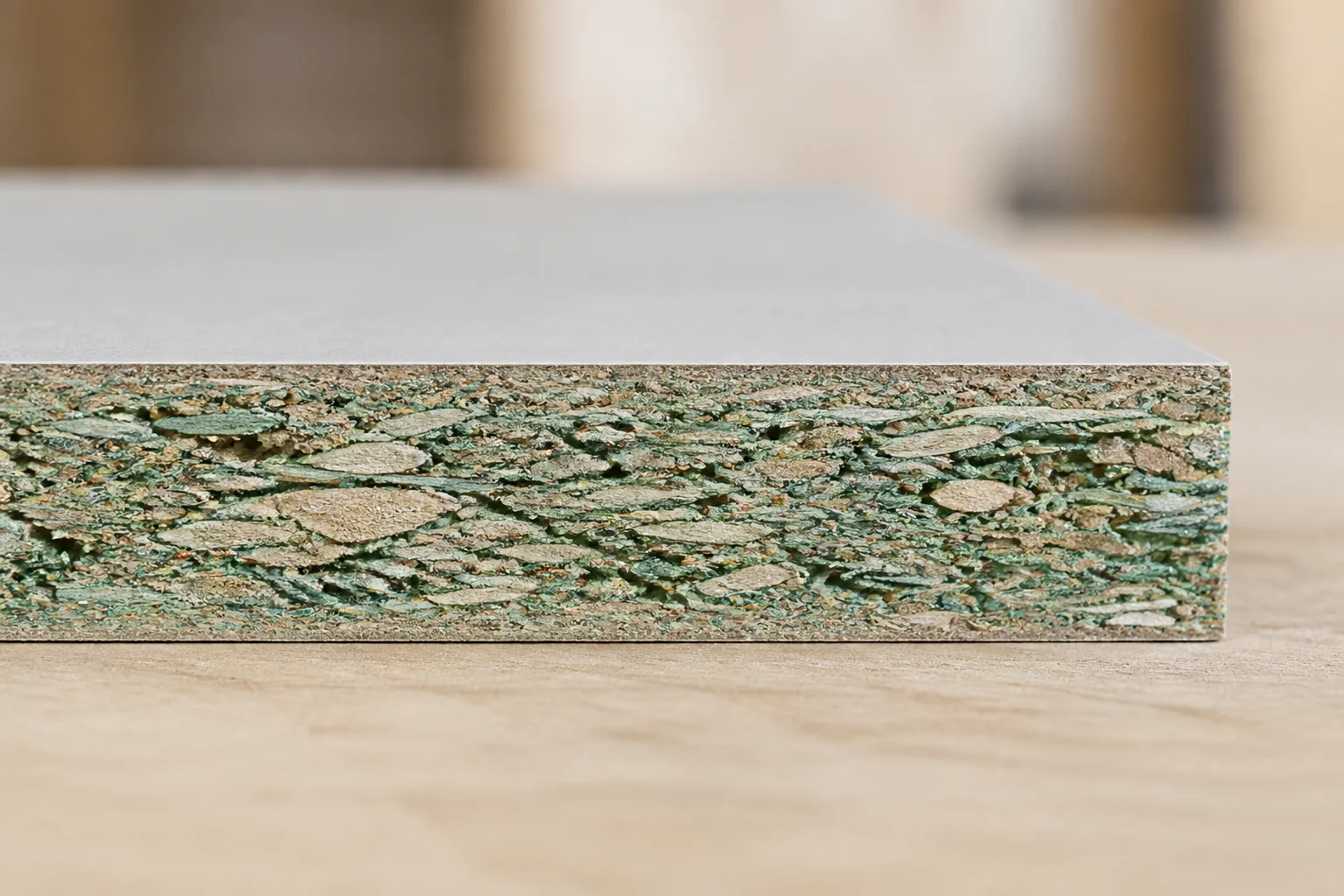
7. MR particleboard: practical moisture resistance for cabinet carcasses
Moisture-resistant particleboard is made from wood particles bonded with a resin system formulated to perform better than standard particleboard in humid conditions. Many manufacturers add green dye so it can be identified during production, but the colour itself is not a performance standard or proof of certification.
MR particleboard is commonly used for melamine-faced kitchen carcasses, bathroom vanities, laundry cabinets and projects in humid regions. It retains particleboard’s advantages—consistent thickness, efficient production and competitive cost—while offering improved resistance to intermittent humidity and accidental splashes.
It is moisture-resistant, not waterproof. Standing water, plumbing leaks and unsealed cut edges can still cause swelling. Edge banding, sink cut-outs, drilled holes and exposed backs must be protected correctly.
| Best for | Kitchen carcasses, bathroom vanities, laundry storage and humid-region projects |
|---|---|
| Common surfaces | Melamine, HPL, PET and decorative laminates |
| Check before ordering | Declared MR grade, thickness-swelling data, density, emission class, manufacturer and edge-sealing specification |
| Main advantage | Cost-effective carcass board with better humidity resistance than standard particleboard |
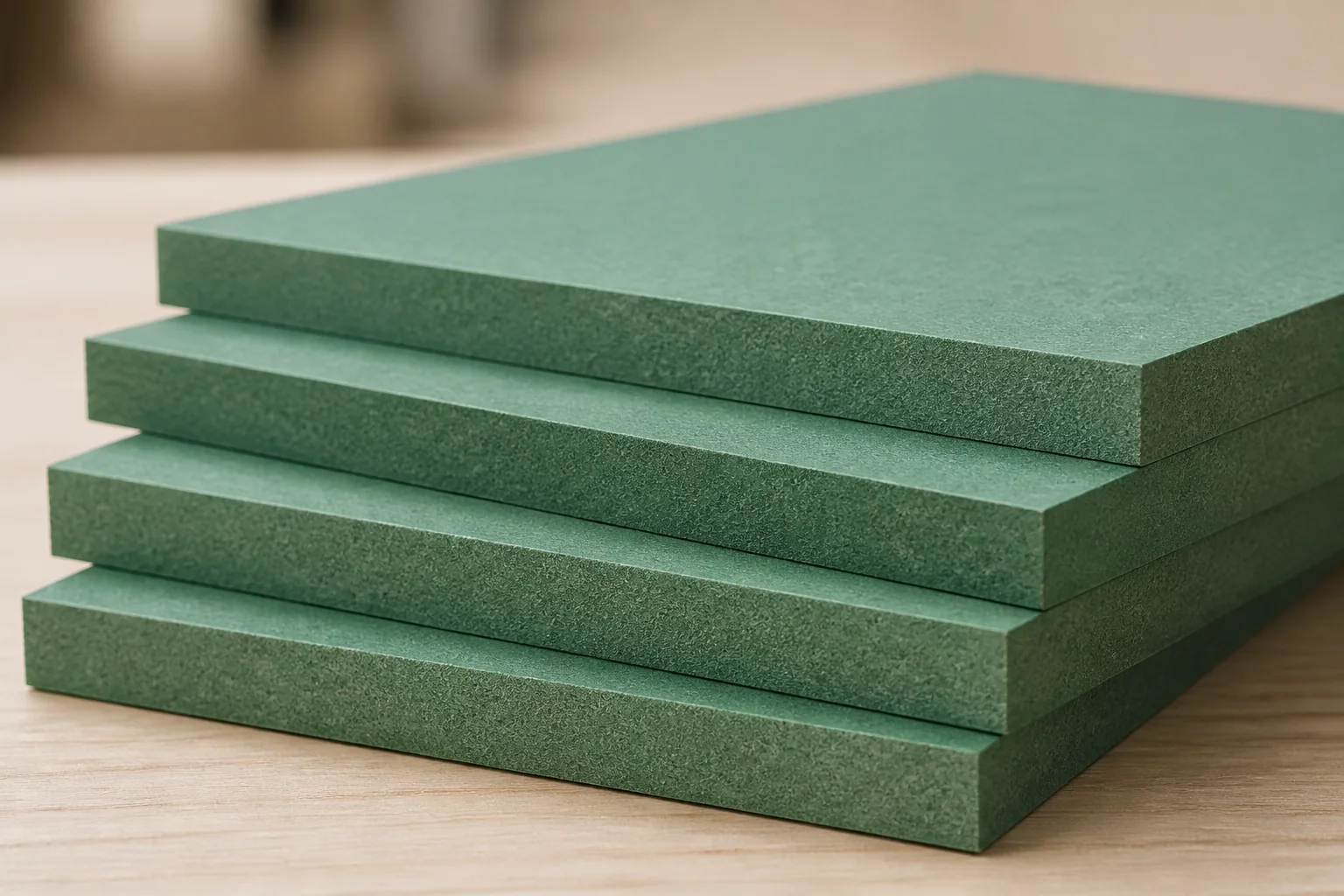
8. MR MDF: moisture-resistant core for smooth and shaped doors
Moisture-resistant MDF is manufactured from fine wood fibres and a moisture-resistant resin formulation. Its cut edge is dense and uniform rather than visibly chipped, which distinguishes it from MR particleboard and makes it suitable for precise routing and smooth finishing.
MR MDF is often selected for lacquered doors, shaker profiles, grooves, PVC-wrapped fronts and other shaped components used in kitchens or humid interiors. It offers better humidity resistance than standard MDF while retaining the smooth faces and machinability required for decorative door production.
MR MDF is also not waterproof. Routed profiles, hinge holes, handle holes and exposed edges need a complete coating or sealing system. Buyers should verify the declared MR grade and test data rather than relying on the green colour alone.
| Best for | Painted, routed, grooved, PVC-wrapped and decorative cabinet doors in humid interiors |
|---|---|
| Common surfaces | Lacquer, PET, PVC membrane, wood veneer and melamine |
| Check before ordering | Declared MR grade, density, thickness-swelling data, emission class, surface sanding and edge-coating system |
| Main advantage | Smooth machining and finishing with improved humidity resistance over standard MDF |
The surface finish still matters
The same substrate can perform and look very different after finishing. Melamine is durable and economical; lacquer provides a smooth premium appearance; natural veneer gives real wood grain; PET offers a uniform modern surface; and HPL is selected where higher wear resistance is important.
The finish, edge banding and back layer help protect the core, but they cannot turn an unsuitable substrate into a waterproof panel. Cabinet performance comes from the complete system: substrate, finish, adhesive, edge sealing, hardware fixing and installation conditions.
Selection recommendations
- For a cost-effective standard kitchen: use quality moisture-resistant particleboard with melamine faces and well-sealed edges for the carcass.
- For lacquered or shaped doors: use MDF because its fine, uniform core supports routing and smooth finishing.
- For sink cabinets and moisture-prone areas: consider properly specified plywood or another verified moisture-resistant board, together with sealed edges and leak protection.
- For premium all-plywood cabinetry: verify the veneer, glue, core gaps, surface finish and actual panel grade instead of relying only on the word “plywood.”
- For natural premium doors and details: use properly dried solid wood with construction that allows normal movement as humidity changes.
- For exposed industrial-style projects: OSB can create a distinctive appearance, but confirm the panel grade, surface preparation and edge protection.
- For eco-board: do not accept the marketing name alone; specify whether the core is plywood, wood-strip board or another substrate and verify its test report.
- For humid cabinet carcasses: choose verified MR particleboard and protect every cut edge; green colour alone is not proof of performance.
- For shaped doors in humid interiors: choose MR MDF with a complete coating and edge-sealing system.
- For export projects: confirm the destination-market formaldehyde requirement, test method and certification for the exact board manufacturer and mill.
The best cabinet is often a material combination. Select each board according to its location, finish, loading, moisture exposure, budget and production method.
Need help selecting cabinet materials?
Tell IanProject your destination country, cabinet drawings, finish, target price and project quantity. We can help compare suitable board combinations and match your requirements with an appropriate cabinet manufacturer.
References
Product structure and application guidance were informed by IanProject’s internal Customer Book and cabinet terminology materials. Technical definitions were cross-checked with APA – The Engineered Wood Association, the USDA Wood Handbook and US EPA composite wood guidance.